 Pitch & Pack
Quick answer
Our top pick is the Pretyw D001, a self-inflating pad with a 4 in thickness and built-in pump and pillow. For backpackers, the WANNTS SLP01 offers a similar setup at a lighter weight.
Our top picks
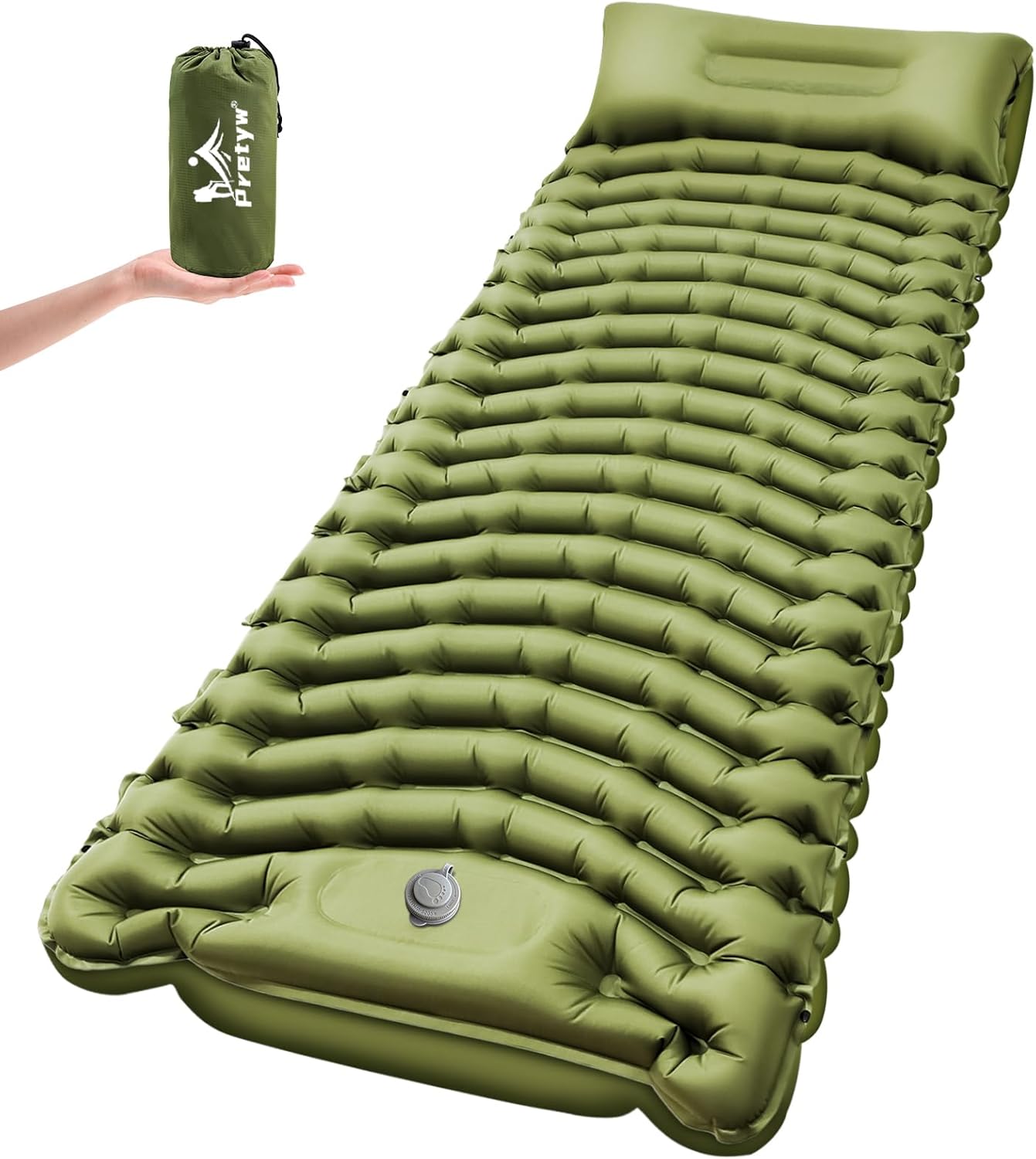 Best overall
Pretyw D001
All-around camping and backpacking
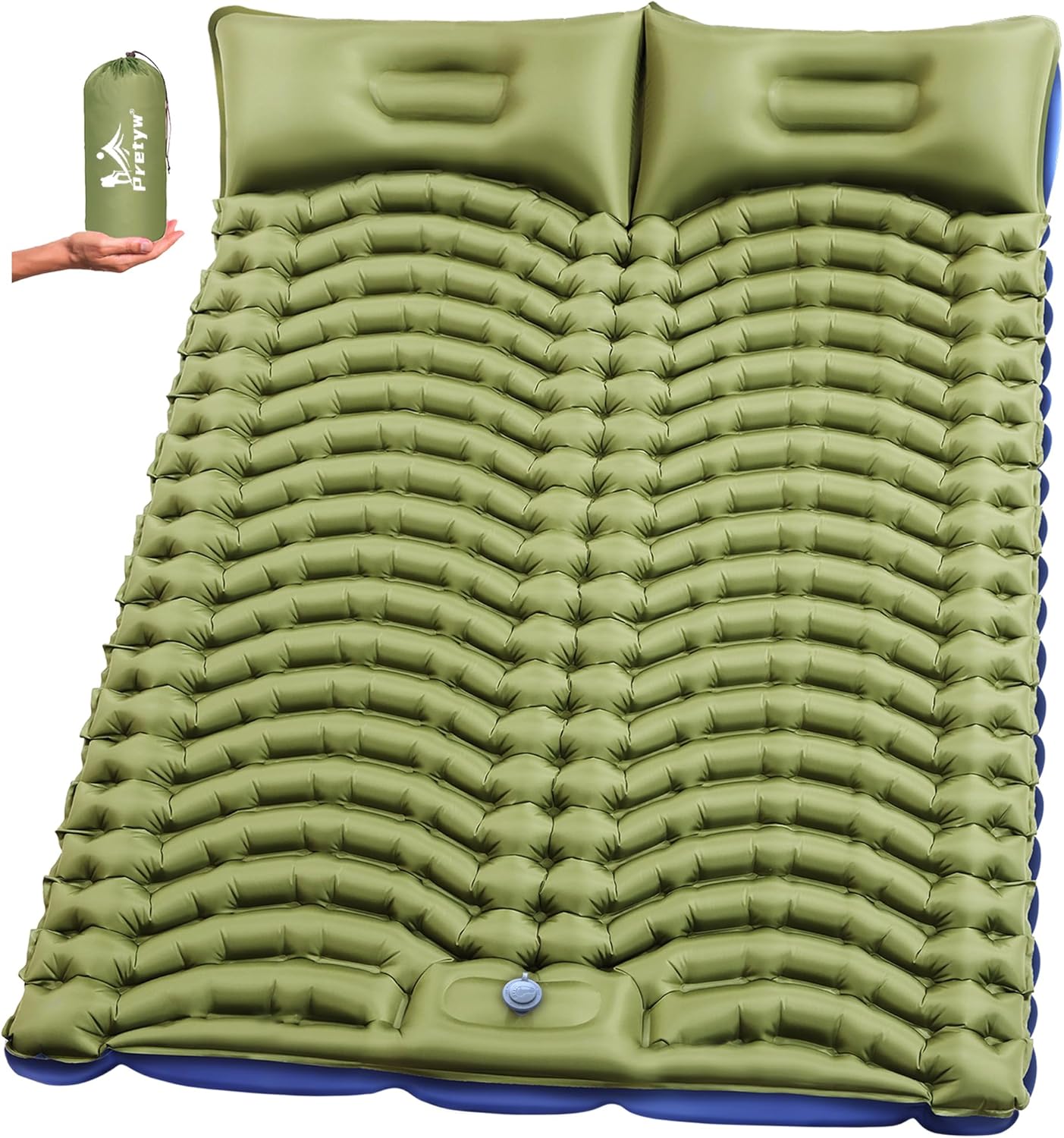 Best for car_camping
Pretyw D001
Car camping with a partner
 Best for backpacking
WANNTS SLP01
Backpacking trips where weight matters
 Best for heavy_sleeper
FUN PAC Camping Sleeping Pad ZW-DRCQD-XJ
Heavy sleepers who backpack
 Top thickness
TREKOLOGY UL R7
Campers who want maximum thickness on a budget
 Top weight_capacity
Therm-a-Rest Basecamp 14031
Heavy sleepers car camping
 Best for quick_setup
AmazonBasics AMZ-SP-19057
Quick setup for backpacking or kids
 #8 pick
Wakeman 75-CMP1009
Car camping or as a spare pad
 #9 pick
THINTON LY-1IXT-WM0N
Ultralight backpacking or emergency use
 #10 pick
OJAYERR Foam Sleeping Pad
Backpackers wanting a simple foam pad
 Lowest weight
Stansport Pack Lite 503-B
Ultralight backpacking where every ounce counts
 #12 pick
Therm-a-Rest Z Lite Original
Mountaineering and rugged camping
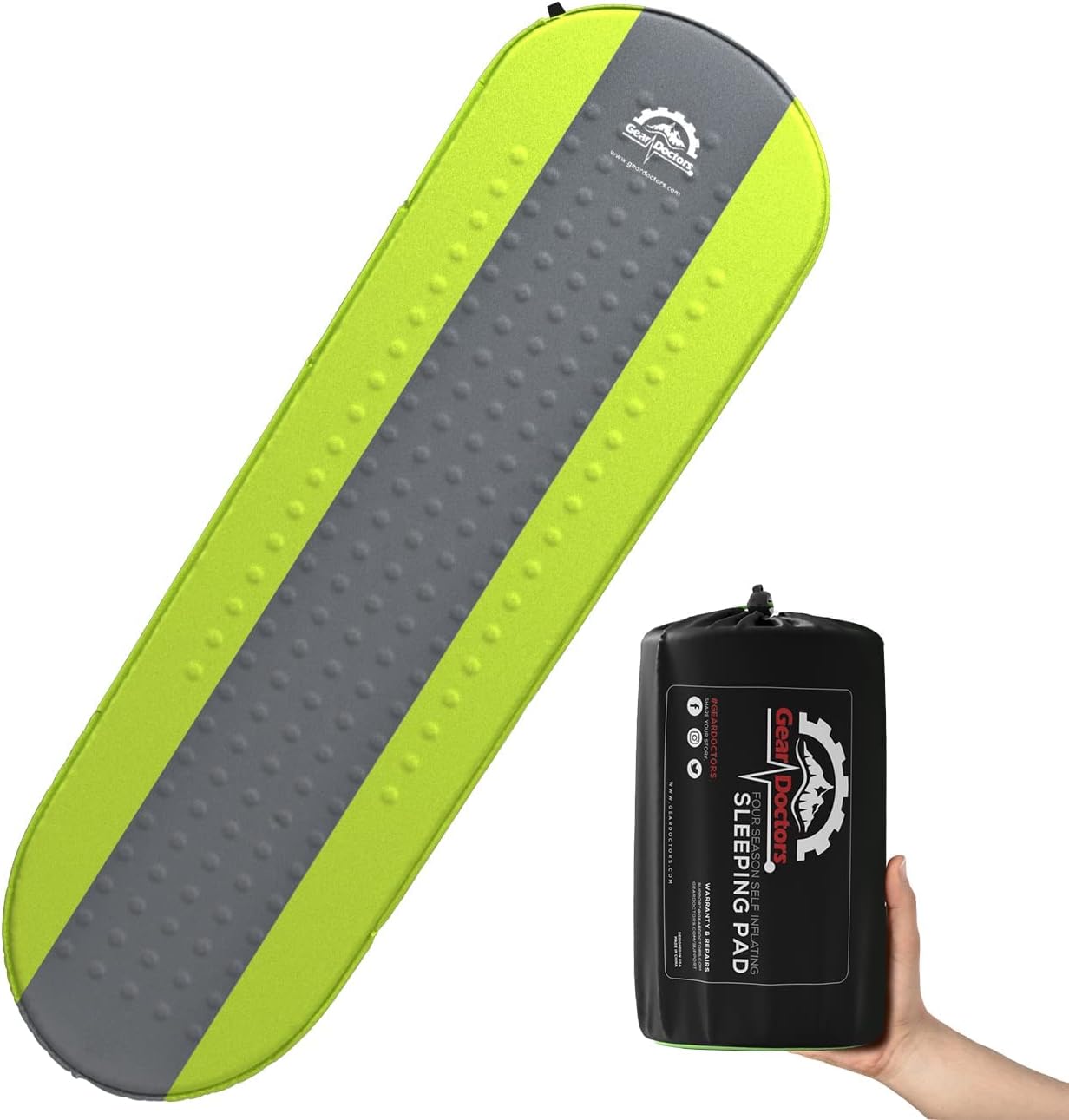 #13 pick
Gear Doctors Oxylus
Campers who want self-inflating convenience
On this page
If you're looking for a comfortable night's sleep without spending a lot, the best budget sleeping pads can still deliver solid support and convenience. We compared manufacturer specifications on thickness, weight, construction type, and extras like built-in pumps and pillows to find pads that work for different camping styles. Whether you're car camping with the family or hitting the trail, there's a budget-friendly option here. For more budget gear ideas, check out our guide to the best discount sleeping bags.
Comparison at a glance
Key specs · full specs in each pick| Model | length | width | thickness | weight | Link |
|---|---|---|---|---|---|
|
D001
|
79 in | 27.5 in | 4 in | 1.8 lb | View on Amazon |
|
D001
|
78 in | 54 in | 4 in | 3 lb | View on Amazon |
|
SLP01
|
75 in | 25 in | 3.5 in | 1.875 lb | View on Amazon |
|
ZW-DRCQD-XJ
|
75 in | 25 in | 3 in | 1.5 lb | View on Amazon |
|
UL R7
|
70.8 in | 24 in | 4 in | 2 lb | View on Amazon |
|
14031
|
77 in | 25 in | 2 in | 3.4 lb | View on Amazon |
|
AMZ-SP-19057
|
75 in | 22.4 in | 2.2 in | 1.4 lb | View on Amazon |
|
75-CMP1009
|
72 in | 24 in | 1 in | 0.6 lb | View on Amazon |
|
LY-1IXT-WM0N
|
72.8 in | 23.6 in | 0.7 in | 0.873 lb | View on Amazon |
|
B0H34QT217
|
77.1 in | 24 in | 0.78 in | 0.688 lb | View on Amazon |
|
503-B
|
72 in | 19 in | 0.38 in | 0.5 lb | View on Amazon |
|
040818023020
|
72 in | 20 in | 0.75 in | 0.875 lb | View on Amazon |
|
Gear Doctors Oxylus
|
72 in | 22 in | 1.5 in | 2.2 lb | View on Amazon |
Best for: All-around camping and backpacking
The Pretyw D001 is a self-inflating pad that balances comfort and convenience. At 4 in thick, it provides good cushioning for side sleepers. The built-in pump inflates it quickly, and the integrated pillow saves you from carrying an extra one. Weighing 1.8 lb, it's light enough for backpacking but roomy enough for car camping. The 79 in length and 27.5 in width offer plenty of space for most sleepers. It's our top overall pick because it covers the most use cases without breaking the bank.
Pros
- Built-in pump and pillow
- Thickness of 4 in for comfort
- Self-inflating design saves effort
- Waterproof construction
Cons
- No listed weight capacity
- May be too bulky for ultralight backpacking
Full specifications (8)
- length
- 79 in
- width
- 27.5 in
- thickness
- 4 in
- weight
- 1.8 lb
- construction_type
- self-inflating
- built_in_pump
- Yes
- built_in_pillow
- Yes
- waterproof
- Yes
Specs: Amazon listing
Best for: Car camping with a partner
The Pretyw D001 is a double-sized self-inflating pad perfect for couples or families. It matches the 4 in thickness of the single version but spans 54 in wide, giving two people plenty of room. The built-in foot pump inflates it in a few minutes, and each side has its own pillow. With a 660 lb weight capacity, it supports heavier sleepers. At 3 lb, it's best for car camping rather than backpacking.
Pros
- Extra-wide double size
- Weight capacity of 660 lb
- Built-in foot pump and pillows
- Self-inflating for easy setup
Cons
- Heavy at 3 lb
- Large packed size
Full specifications (9)
- length
- 78 in
- width
- 54 in
- thickness
- 4 in
- weight
- 3 lb
- construction_type
- self-inflating
- built_in_pump
- Yes
- built_in_pillow
- Yes
- waterproof
- Yes
- weight_capacity
- 660 lb
Specs: Amazon listing
Best for: Backpacking trips where weight matters
The WANNTS SLP01 is an inflatable pad designed for backpackers who want quick setup. Its built-in foot pump inflates it quickly. The hexagon pattern is said to improve comfort, and the 3.5 in thickness provides decent insulation from the ground. Weighing 1.875 lb, it's lighter than the Pretyw single but still offers a 25 in width. The 680 lb weight capacity is impressive for its size. It lacks a built-in pillow, so you'll need to bring your own.
Pros
- Very fast inflation with foot pump
- Lightweight at 1.875 lb
- High weight capacity (680 lb)
- Waterproof
Cons
- No built-in pillow
- Narrower than some competitors
Full specifications (8)
- length
- 75 in
- width
- 25 in
- thickness
- 3.5 in
- weight
- 1.875 lb
- construction_type
- inflatable
- built_in_pump
- Yes
- waterproof
- Yes
- weight_capacity
- 680 lb
Specs: Amazon listing
Best for: Heavy sleepers who backpack
The FUN PAC Camping Sleeping Pad ZW-DRCQD-XJ is a self-inflating pad that prioritizes weight savings without sacrificing comfort. At 1.5 lb, it's one of the lightest self-inflating pads here. It has a built-in pump and pillow, and the 3 in thickness still offers good cushioning. The 400 lb weight capacity makes it suitable for heavier campers. The egg-shaped air cells are designed to relieve pressure points. It's a solid choice for backpackers who want self-inflating convenience.
Pros
- Lightweight at 1.5 lb
- Built-in pump and pillow
- Weight capacity of 400 lb
- Self-inflating design
Cons
- Only 3 in thick
- Narrow width (25 in)
Full specifications (9)
- length
- 75 in
- width
- 25 in
- thickness
- 3 in
- weight
- 1.5 lb
- construction_type
- self-inflating
- built_in_pump
- Yes
- built_in_pillow
- Yes
- waterproof
- Yes
- weight_capacity
- 400 lb
Specs: Amazon listing
Best for: Campers who want maximum thickness on a budget
The TREKOLOGY UL R7 stands out for its 4 in thickness, which helps prevent bottoming out on uneven ground. It's an inflatable pad (no built-in pump) that weighs 2 lb. The 70.8 in length and 24 in width are standard, and it supports up to 330 lb. It's best for campers who prioritize cushioning and don't mind inflating manually or with a separate pump sack.
Pros
- Thickness of 4 in for superior comfort
- Weight capacity of 330 lb
- Waterproof construction
- Compact packed size
Cons
- No built-in pump or pillow
- Heavier than some backpacking pads
Full specifications (8)
- length
- 70.8 in
- width
- 24 in
- thickness
- 4 in
- weight
- 2 lb
- construction_type
- inflatable
- built_in_pump
- No
- waterproof
- Yes
- weight_capacity
- 330 lb
Specs: Amazon listing
Best for: Heavy sleepers car camping
The Therm-a-Rest Basecamp 14031 is a self-inflating pad built for heavy sleepers. It has an enormous 1,440 lb weight capacity, far exceeding any other pad here. The 2 in thickness is modest, but the foam core provides reliable insulation. At 3.4 lb, it's heavy, so it's best for car camping. The WingLock valve makes inflation faster than classic valves. It's a durable, no-frills option for larger campers.
Pros
- Weight capacity of 1,440 lb
- Self-inflating with fast valve
- Durable construction
- Good insulation from foam core
Cons
- Heavy at 3.4 lb
- Only 2 in thick
- No built-in pump or pillow
Full specifications (6)
- length
- 77 in
- width
- 25 in
- thickness
- 2 in
- weight
- 3.4 lb
- construction_type
- self-inflating
- weight_capacity
- 1,440 lb
Specs: Amazon listing
Best for: Quick setup for backpacking or kids
The AmazonBasics AMZ-SP-19057 is an inflatable pad with a built-in foot pump that inflates quickly. Weighing just 1.4 lb, it's one of the lightest options here. The 2.2 in thickness is on the thinner side, but the water-resistant construction helps keep you dry. It's 22.4 in wide, which is narrower than most. The 220 lb weight capacity is lower, so it's best for smaller campers or children.
Pros
- Very lightweight at 1.4 lb
- Built-in foot pump for quick setup
- Compact packed size
- Water-resistant
Cons
- Only 2.2 in thick
- Narrow width (22.4 in)
- Low weight capacity (220 lb)
Full specifications (7)
- length
- 75 in
- width
- 22.4 in
- thickness
- 2.2 in
- weight
- 1.4 lb
- construction_type
- inflatable
- built_in_pump
- Yes
- weight_capacity
- 220 lb
Specs: Amazon listing
Best for: Car camping or as a spare pad
The Wakeman 75-CMP1009 is a simple foam pad that's lightweight and waterproof. At 0.6 lb, it's the lightest pad in this guide. The 1 in thickness provides basic cushioning, and the non-slip texture helps keep it in place. It's 72 in long and 24 in wide. This pad is best for car camping, as a cot topper, or for yoga. It won't offer the comfort of thicker inflatable pads but is nearly indestructible.
Pros
- Ultralight at 0.6 lb
- Waterproof and non-slip
- Durable foam construction
- Versatile for camping and yoga
Cons
- Only 1 in thick
- No built-in pump or pillow
- Not suitable for backpacking comfort
Full specifications (6)
- length
- 72 in
- width
- 24 in
- thickness
- 1 in
- weight
- 0.6 lb
- construction_type
- foam
- waterproof
- Yes
Specs: Amazon listing
Best for: Ultralight backpacking or emergency use
The THINTON LY-1IXT-WM0N is a foldable closed-cell foam pad with an aluminum film on the back for heat reflection. It's 0.7 in thick and weighs 0.873 lb. The 72.8 in length and 23.6 in width are standard. It's waterproof and moisture-proof, making it a good ground barrier. The folded size is compact, but it's not as comfortable as thicker pads. Best for minimalist campers or as a backup.
Pros
- Lightweight at 0.873 lb
- Foldable and compact
- Waterproof and moisture-proof
- Reflective aluminum film for warmth
Cons
- Only 0.7 in thick
- No built-in pump or pillow
- Less comfortable than inflatable pads
Full specifications (6)
- length
- 72.8 in
- width
- 23.6 in
- thickness
- 0.7 in
- weight
- 0.873 lb
- construction_type
- foam
- waterproof
- Yes
Specs: Amazon listing
Best for: Backpackers wanting a simple foam pad
The OJAYERR Foam Sleeping Pad is a closed-cell foam pad with an eggshell design for added cushioning. It's 0.78 in thick and weighs just 0.688 lb. The 77.1 in length is longer than many foam pads, and the 24 in width is standard. The aluminum film on the bottom reflects heat. It's a good choice for campers who want a lightweight, durable pad without the risk of punctures.
Pros
- Very lightweight at 0.688 lb
- Longer length (77.1 in)
- Eggshell design for comfort
- Reflective aluminum film
Cons
- Only 0.78 in thick
- No built-in pump or pillow
- Not as plush as inflatable pads
Full specifications (5)
- length
- 77.1 in
- width
- 24 in
- thickness
- 0.78 in
- weight
- 0.688 lb
- construction_type
- foam
Specs: Amazon listing
Best for: Ultralight backpacking where every ounce counts
The Stansport Pack Lite 503-B is a closed-cell foam pad that's the lightest in this guide at 0.5 lb. It's 0.38 in thick, so it's more of a groundsheet than a cushion. The 72 in length and 19 in width are adequate for most sleepers. It's waterproof and puncture-proof, making it a reliable base layer. Best for ultralight backpackers who prioritize weight over comfort.
Pros
- Lightest pad at 0.5 lb
- Waterproof and puncture-proof
- Compact when rolled
- Durable closed-cell foam
Cons
- Only 0.38 in thick
- Very narrow (19 in)
- Minimal cushioning
Full specifications (6)
- length
- 72 in
- width
- 19 in
- thickness
- 0.38 in
- weight
- 0.5 lb
- construction_type
- foam
- waterproof
- Yes
Specs: Amazon listing
Best for: Mountaineering and rugged camping
The Therm-a-Rest Z Lite Original is a classic accordion-fold foam pad trusted by mountaineers. It's 0.75 in thick and weighs 0.875 lb. The dimpled pattern traps heat for warmth, and the foam is softer on top for comfort. It's 72 in long and 20 in wide. This pad is durable and economical, but not as plush as inflatable options. Best for those who want a reliable, no-fuss pad.
Pros
- Trusted brand with proven durability
- Accordion fold for easy packing
- Heat-trapping dimples
- Lightweight at 0.875 lb
Cons
- Only 0.75 in thick
- No built-in pump or pillow
- Narrow width (20 in)
Full specifications (5)
- length
- 72 in
- width
- 20 in
- thickness
- 0.75 in
- weight
- 0.875 lb
- construction_type
- foam
Specs: Amazon listing
Best for: Campers who want self-inflating convenience
The Gear Doctors Oxylus is a self-inflating pad with a foam core. It's 1.5 in thick and weighs 2.2 lb. The 72 in length and 22 in width are standard. It supports up to 250 lb. The self-inflating design is beginner-friendly. It's a good middle ground between foam and inflatable pads.
Pros
- Self-inflating with foam core
- Weight capacity of 250 lb
- Waterproof construction
- Good balance of comfort and weight
Cons
- Heavier than pure foam pads
- No built-in pump or pillow
Full specifications (7)
- length
- 72 in
- width
- 22 in
- thickness
- 1.5 in
- weight
- 2.2 lb
- construction_type
- self-inflating
- waterproof
- Yes
- weight_capacity
- 250 lb
Specs: Amazon listing
How to choose
Thickness: How much cushion do you need?
Thicker pads offer more comfort and insulation from the ground. Pads 4 in or thicker are great for side sleepers and uneven terrain. Thinner pads (under 1 in) are lighter and pack smaller but provide less cushion. For car camping, prioritize thickness. For backpacking, balance thickness with weight. If you often sleep on rocky ground, a thicker pad like the TREKOLOGY UL R7 helps prevent bottoming out.
Weight: How far are you carrying it?
Weight is critical for backpackers. Foam pads like the Stansport Pack Lite 503-B at 0.5 lb are the lightest, while self-inflating pads like the Therm-a-Rest Basecamp 14031 at 3.4 lb are heavier. Inflatable pads with built-in pumps fall in between. If you're car camping, weight matters less. For backpacking, aim for under 1.875 lb to keep your pack manageable. Check out our guide to best compact sleeping bags for more lightweight gear ideas.
Construction type: Foam, inflatable, or self-inflating?
Foam pads are durable, cheap, and never leak, but they're thin. Inflatable pads offer more comfort for their weight but risk punctures. Self-inflating pads combine foam and air, offering good comfort and easy setup without a separate pump. The Pretyw D001 is a self-inflating pad that balances these factors well. For rugged use, foam is reliable. For comfort, inflatable or self-inflating is better.
Built-in pump and pillow: Are they worth it?
Built-in pumps save you from carrying a separate pump or inflating by mouth. They're especially useful for quick setup after a long hike. Built-in pillows eliminate the need to pack a separate pillow, saving weight and space. Pads like the FUN PAC Camping Sleeping Pad ZW-DRCQD-XJ include both. However, these features add weight and complexity. If you prefer a lighter setup, a pad without them, like the TREKOLOGY UL R7, may be better.
Weight capacity: Will it support you?
Weight capacity is crucial for larger campers. Most pads support a range suitable for average-sized adults, but the Therm-a-Rest Basecamp 14031 supports 1,440 lb, making it ideal for heavy sleepers. The AmazonBasics AMZ-SP-19057 only supports 220 lb, so it's best for smaller adults or children. Always check the weight capacity against your body weight plus any gear you sleep on. If you're close to the limit, choose a pad with a higher rating.
Frequently asked questions
How thick should a sleeping pad be for comfort?
For most campers, a thickness of 4 in or more provides good cushioning, especially for side sleepers. Thinner pads (under 1 in) are fine for back sleepers or as a base layer. If you're car camping, thicker is better. For backpacking, a compromise around 3.5 in works well.
Are foam sleeping pads better than inflatable ones?
Foam pads are more durable, lighter, and never puncture, but they offer less comfort. Inflatable pads are more comfortable and pack smaller, but they can leak. Self-inflating pads are a middle ground. Your choice depends on your priorities: foam for reliability, inflatable for comfort, self-inflating for convenience.
Can I use a budget sleeping pad for backpacking?
Yes, many affordable pads are light enough for backpacking. Look for pads under 1.875 lb with a built-in pump for quick setup. Foam pads like the Stansport Pack Lite 503-B are ultralight but thin. Inflatable pads like the WANNTS SLP01 offer better comfort for a similar weight. Always check the packed size to ensure it fits in your backpack.
What does R-value mean for a sleeping pad?
R-value measures insulation from the ground. Higher R-values mean more warmth. For three-season camping, an R-value of 2-4 is sufficient. For winter camping, look for R-values above 5. Some pads in this guide, like the Gear Doctors Oxylus, have a foam core that provides insulation, but exact R-values are not always listed by manufacturers.
How do I clean and store my sleeping pad?
Most pads can be wiped clean with a damp cloth and mild soap. Avoid harsh chemicals. For inflatable pads, store them partially inflated to prevent the layers from sticking. Foam pads can be rolled or folded. Always dry your pad completely before storing to prevent mold. Check the manufacturer's instructions for specific care.
Bottom line
The Pretyw D001 is our top overall pick for its balance of thickness, built-in features, and weight. For couples car camping, the Pretyw D001 offers a spacious double pad. Backpackers will appreciate the lightweight WANNTS SLP01 with its fast inflation. Heavy sleepers should consider the Therm-a-Rest Basecamp 14031 for its high weight capacity. Foam pads like the Stansport Pack Lite 503-B are best for ultralight trips. Choose based on your camping style and comfort needs.
Related articles
-
Best Sleeping Pad Pump
Compare the best sleeping pad pumps with built-in foot pumps and standalone pump sacks. Find the right pump for backpacking, car camping, and more.
Nov 2, 2026
-
Best Sleeping Bag and Pad Combo
Compare the best sleeping bag and pad combos for camping. Find top picks for backpacking, car camping, tall campers, and more based on specs and use cases.
Nov 2, 2026
-
Best Sleep System for Winter Camping
Find the best sleep system for winter camping. Compare modular bags, lightweight options, and heated models based on specs. Top pick for warmth and versatility.
Nov 2, 2026
-
Best Camping Cot for Heavy Person
Find the best camping cot for heavy person. Compare weight capacities, widths, and features for comfortable camping sleep. Top picks for heavy sleepers and tall campers.
Nov 2, 2026


