Pitch & Pack
Quick answer
The HAFITH Foam Hiking Seat is our top pick for hikers who want the lightest possible sit pad at 0.1 lb. For a waterproof option with a carry bag, consider the HAFITH HF-SP001.
Our top picks
 Best overall
HAFITH Foam Hiking Seat
Ultralight day hikes and backpacking
 #2 pick
FOCHIER F Stadium Seat Pad
Budget-conscious hikers
 #3 pick
AMSDCN Camping Foam Pad
Wet or rainy conditions
 #4 pick
Sportneer CSP-01
Hikers wanting extra comfort
 #5 pick
Sportneer CSP-01
Day hikes and picnics
 Best for travel and storage
HAFITH HF-SP001
Travel and organized packing
 #7 pick
HAFITH HF-SP001
Hikers who want a carry bag
 #8 pick
HAFITH SP001YYOOFBA01
Fully equipped hikers
 #9 pick
Jutom WO-Jutom-2221
Group camping and car camping
On this page
A sit pad for hiking is a simple piece of gear that makes a big difference on the trail. It keeps you dry, clean, and comfortable during rest breaks, lunch stops, or camp chores. The key specs to compare are weight, water resistance, and packability. We compared these factors across the top sit pads on the market, checking each against the manufacturer's listed specifications to help you find the right one for your hiking style.
Comparison at a glance
| Model | Weight | Water Resistance | Material | Carry Bag | Link |
|---|---|---|---|---|---|
|
B0GZ2M3V2W
|
0.1 lb | - | polyester | - | View on Amazon |
|
PAD-Green-1PC
|
0.11 lb | - | polyester | - | View on Amazon |
|
B0C36W9H45
|
0.11 lb | waterproof | - | - | View on Amazon |
|
CSP-01
|
0.13 lb | waterproof | - | - | View on Amazon |
|
CSP-01
|
0.13 lb | waterproof | - | - | View on Amazon |
|
HF-SP001
|
0.2 lb | waterproof | - | Yes | View on Amazon |
|
HF-SP001
|
0.18 lb | - | - | Yes | View on Amazon |
|
SP001YYOOFBA01
|
0.26 lb | waterproof | - | Yes | View on Amazon |
|
WO-Jutom-2221
|
0.789 lb | waterproof | - | - | View on Amazon |
Best for: Ultralight day hikes and backpacking
The HAFITH Foam Hiking Seat earns our best overall label because it is the lightest sit pad we compared, at just 0.1 lb. This foam pad folds down to a compact size and includes a Velcro strap, a carrying bag, and a carabiner for easy attachment to a pack. It is made from IXPE material with an aluminum foil layer, which helps block moisture and cold from the ground. On paper, this is the best choice for hikers who count every ounce.
Pros
- Lightest weight at 0.1 lb
- Includes carry bag and carabiner
- Folds compactly
Cons
- No listed water resistance
- Thin foam may not suit rough ground
Best for: Budget-conscious hikers
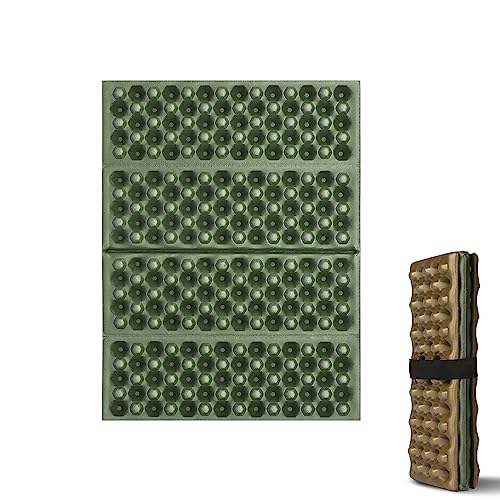
The FOCHIER F Stadium Seat Pad is a close competitor to our top pick, weighing 0.11 lb. It uses a hexagonal foam design that folds into a small bundle secured by an elastic band. The IXPE material is moisture-proof and flexible. While it lacks a dedicated carry bag, its low weight and simple design make it a solid option for hikers who want an affordable, no-frills sit pad.
Pros
- Very lightweight at 0.11 lb
- Moisture-proof IXPE material
- Hexagonal fold saves space
Cons
- No carry bag included
- No listed water resistance
Best for: Wet or rainy conditions
The AMSDCN Camping Foam Pad is a waterproof EVA foam pad that weighs 0.11 lb. Its key advantage is the waterproof construction, which makes it a good choice for sitting on wet ground or snow. The foam is foldable and portable, though it does not include a carry bag or carabiner. For hikers who prioritize staying dry over the lightest possible weight, this pad offers a practical trade-off.
Pros
- Waterproof construction
- Lightweight at 0.11 lb
- EVA foam is durable
Cons
- No carry bag or carabiner
- Material not specified
Best for: Hikers wanting extra comfort
The Sportneer CSP-01 offers a larger sitting area with a square shape and a thickness designed for comfort. It weighs 0.13 lb and is made from pearl cotton and Oxford cloth with a waterproof aluminum foil bottom. It includes a carabiner for easy attachment to a backpack. This pad is a good middle-ground option for hikers who want a bit more cushion and coverage without a big weight penalty.
Pros
- Waterproof bottom layer
- Larger sitting surface
- Includes carabiner
Cons
- Heavier than top pick
- No carry bag
Best for: Day hikes and picnics
The Sportneer CSP-01 is identical in specs to the other Sportneer pad, weighing 0.13 lb and featuring a waterproof aluminum foil bottom. It is made from pearl cotton and Oxford cloth and includes a carabiner. This version offers the same performance and features as its counterpart, making it a reliable choice for hikers who want a waterproof, foldable sit pad with a bit more width.
Pros
- Waterproof bottom
- Lightweight at 0.13 lb
- Includes carabiner
Cons
- No carry bag
- Same as other Sportneer model
Best for: Travel and organized packing
The HAFITH HF-SP001 is our pick for best for travel and storage. It weighs 0.2 lb and is waterproof, with an included carry bag and carabiner. The egg-style foam construction folds into a compact shape that is easy to stow in a pack or suitcase. The aluminum foil layer adds moisture protection. For hikers who need a sit pad that packs down small and stays organized, this is a top choice.
Pros
- Waterproof with carry bag
- Compact fold for storage
- Includes carabiner
Cons
- Heavier than ultralight options
- Material not specified
Best for: Hikers who want a carry bag
The HAFITH HF-SP001 is a foam hiking seat with an egg-style construction and a carry bag. It weighs 0.18 lb, making it slightly heavier than the lightest pads but still packable. The design folds into a compact shape, and the included bag helps keep it clean in a pack. It is a solid choice for hikers who want a dedicated storage solution without adding much bulk.
Pros
- Includes carry bag
- Egg-style fold saves space
- Moderate weight
Cons
- No listed water resistance
- Heavier than top pick
Best for: Fully equipped hikers
The HAFITH SP001YYOOFBA01 is a waterproof foam seat pad that includes both a carry bag and carabiner clips. At 0.26 lb, it is the heaviest of the single pads we compared, but it offers the most complete accessory package. The IXPE material with aluminum foil layer provides moisture and cold protection. This pad suits hikers who want a fully equipped sit pad and are willing to carry a few extra ounces.
Pros
- Waterproof with carry bag
- Includes carabiner clips
- Durable IXPE material
Cons
- Heaviest single pad at 0.26 lb
- Material not specified
Best for: Group camping and car camping
The Jutom WO-Jutom-2221 is a set of 12 foldable foam pads made from XPE material, each waterproof. At 0.789 lb total, this is the heaviest option by far, but it provides enough pads for a group or family. Each pad measures a generous size and can be used individually. This set is not for solo ultralight hikers, but it is a practical choice for car camping, base camps, or group outings.
Pros
- 12 pads for group use
- Waterproof XPE material
- Good value for multiple users
Cons
- Very heavy at 0.789 lb
- Not for solo backpacking
How to choose
Weight: every ounce counts on the trail
For hikers and backpackers, weight is often the most important factor in a sit pad. The lightest pads weigh around 0.1 lb and can be clipped to a pack without adding noticeable heft. Heavier pads, especially multi-packs, may be better suited for car camping or base camps where weight is less critical. Consider how far you will carry the pad and whether the extra ounces are worth it for more comfort or features.
Water resistance: staying dry on wet ground
A waterproof or water-resistant sit pad keeps you dry when you sit on damp soil, wet grass, or snow. Some pads use an aluminum foil layer or a waterproof coating to block moisture. If you hike in rainy climates or take breaks on wet ground, a pad with listed water resistance is a smart choice. Pads without this feature may still work on dry surfaces but can let moisture through over time.
Packability and storage: how it fits in your pack
Sit pads come in different folding designs. Some fold into a small rectangle, while others roll up or use an egg-style construction that nests together. A carry bag or strap helps keep the pad compact and easy to grab. If you have limited pack space or want to attach the pad to the outside of your backpack, look for models that include a carabiner or a dedicated storage pouch.
Material and durability: what the pad is made of
Common materials include IXPE foam, EVA foam, and XPE foam, each offering a different balance of weight, cushion, and durability. Some pads add a fabric layer like Oxford cloth for extra toughness. A more durable material can handle rough ground and repeated use, while a softer foam may be more comfortable but less long-lasting. Check the manufacturer's specifications to see what the pad is made from and how it matches your expected use.
Frequently asked questions
Do I really need a sit pad for hiking?
A sit pad is not essential, but it makes rest stops much more comfortable. It keeps you dry, clean, and insulated from cold ground. For day hikers and backpackers, the small weight penalty is usually worth the comfort gain.
How do I attach a sit pad to my backpack?
Many sit pads include a carabiner or a strap that lets you clip them to the outside of your pack. Some come with a carry bag that can be lashed to a daisy chain or compression strap. If your pad does not have these, you can use a separate carabiner or stuff it inside your pack.
Can I use a sit pad for camping as well as hiking?
Yes. Most sit pads work well for both hiking and camping. They provide a clean, dry place to sit at camp, around the fire, or at a picnic table. Multi-packs are especially useful for group camping trips.
What is the difference between IXPE and EVA foam?
IXPE foam is a cross-linked polyethylene foam that is lightweight, moisture-resistant, and often used in sit pads. EVA foam is a softer, more flexible material that offers good cushioning. Both are durable, but IXPE tends to be more water-resistant, while EVA may be more comfortable on hard surfaces.
Bottom line
For most hikers, the HAFITH Foam Hiking Seat offers the best balance of ultralight weight and convenience. If you hike in wet conditions, the AMSDCN Camping Foam Pad provides reliable waterproofing. For those who prioritize organized packing, the HAFITH HF-SP001 includes a carry bag and folds compactly. Choose the pad that matches your trail needs and weight tolerance.
Related articles
-
Best Trowel for Backpacking
Find the best trowel for backpacking. We compare specs like weight and material to help you choose a lightweight, durable cathole tool for the trail.
Nov 9, 2026
-
Best Hiking Umbrella
Find the best hiking umbrella for your next trip. Compare top picks based on weight, coverage, and hands-free features. Choose the right umbrella for day hikes and backpacking.
Nov 9, 2026
-
Best Gaiters for Hiking
Find the best gaiters for hiking. We compare specs like weight and water resistance to help you choose the right pair for day hikes, backpacking, and wet conditions.
Nov 9, 2026
-
Best Snowshoes for Hiking
Find the best snowshoes for hiking. We compare specs like weight, material, and features to help you choose the right pair for day hikes and winter adventures.
Nov 9, 2026