 Pitch & Pack
Quick answer
The FNARMW Air Pad with Integrated Pillow T-C09 is our top pick for hikers who want maximum comfort, with a 5 in thickness and 800 lb weight capacity. For ultralight backpacking, consider the MOXILS Sleeping Pad DM-SLP02 at 1.9 lb.
Our top picks
 Best overall
FNARMW Air Pad with Integrated Pillow T-C09
Backpacking and car camping with maximum comfort
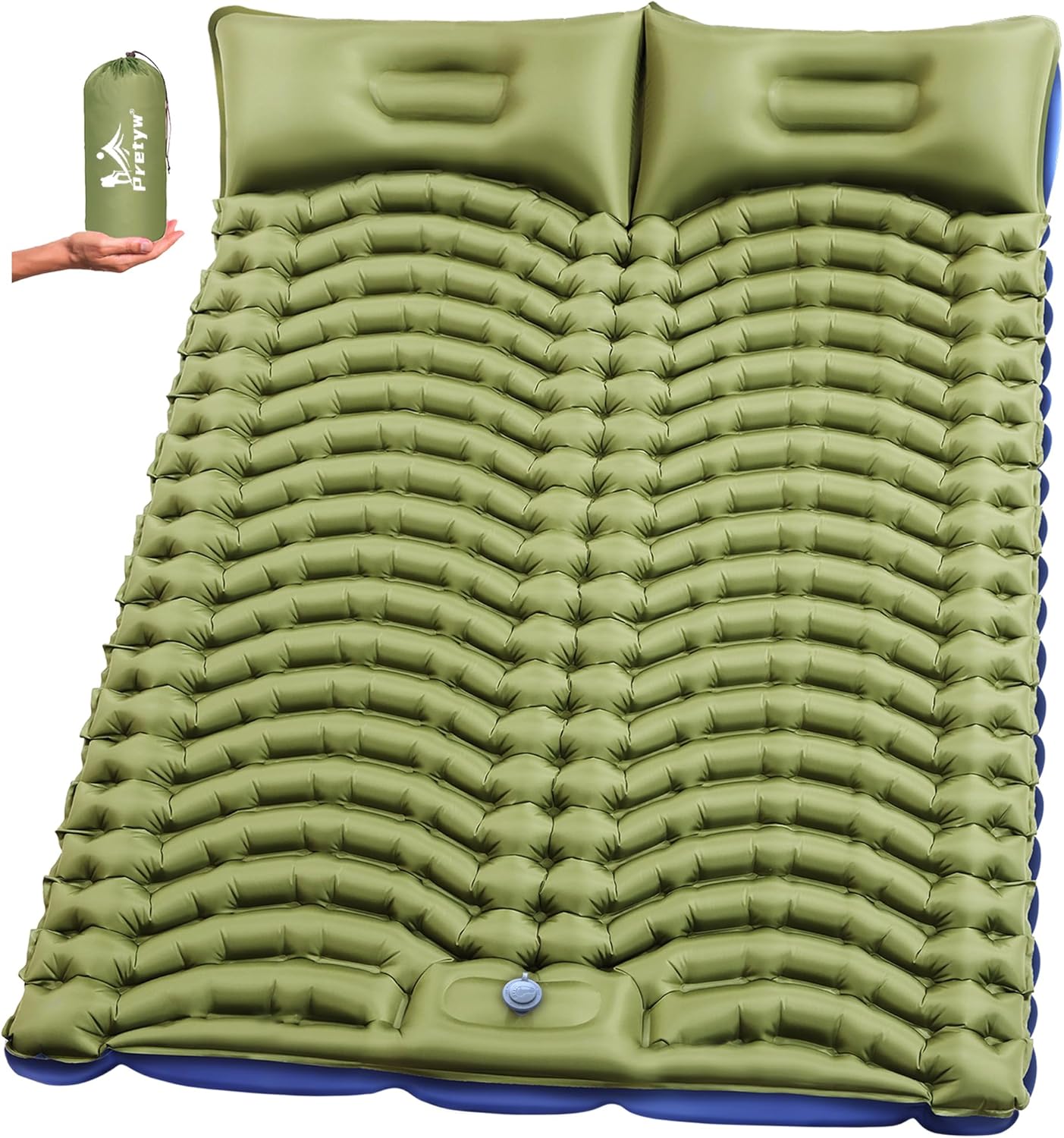 Best for car_camping
Pretyw D001
Car camping with a partner
 Best for backpacking
MOXILS Sleeping Pad DM-SLP02
Ultralight backpacking trips
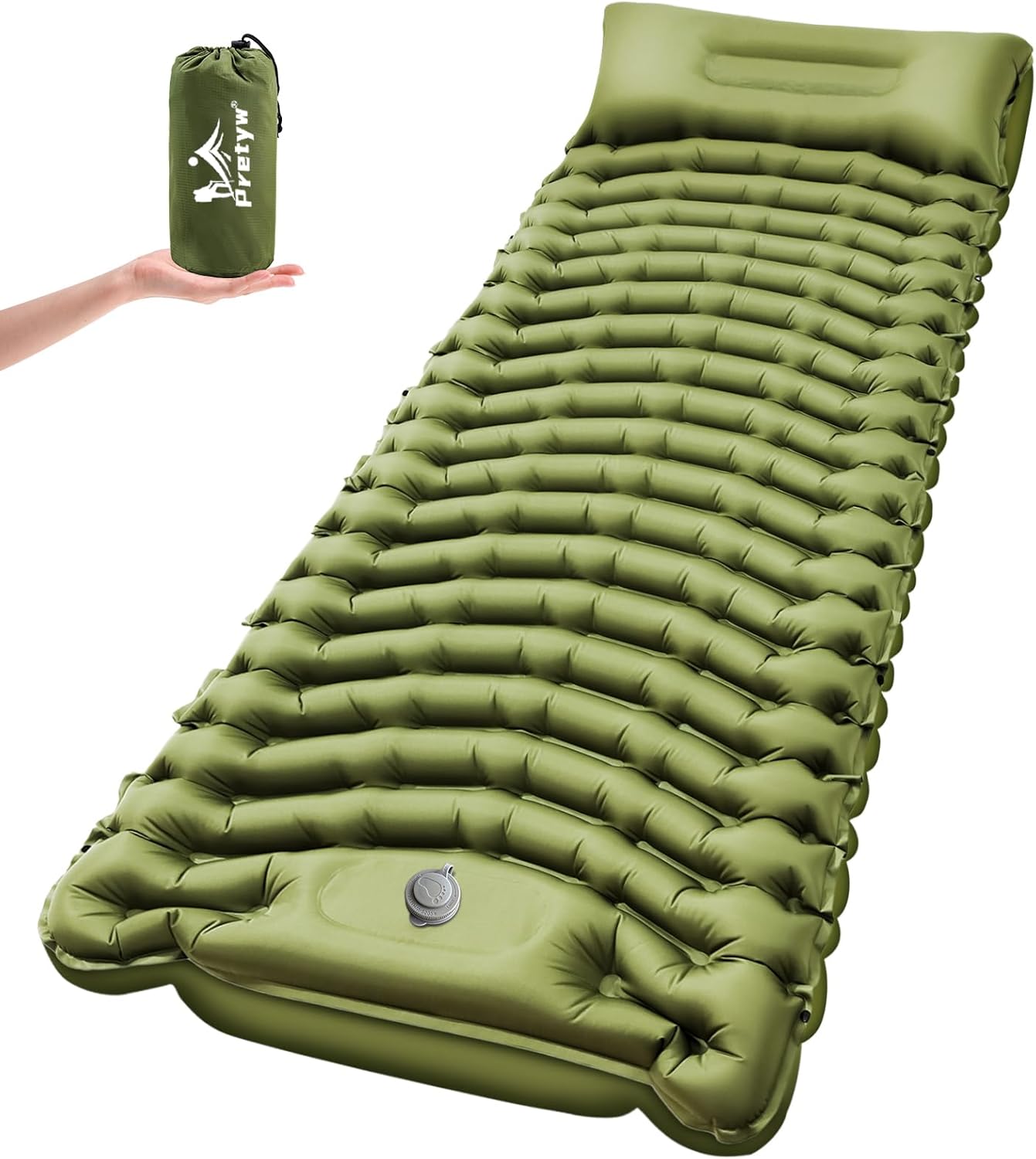 Best for tall_camper
Pretyw D001
Tall hikers needing extra length
 Best for heavy_sleeper
Oramoose SD-Sleeping Pad-01
Heavy sleepers needing strong support
 Best for quick_setup
Overmont PFS-SleepingMats-BlueGreen
Hikers who want fast setup after a long day
 Top thickness
NEMO Equipment Switchback NM-SWB-R
Ultralight hikers who want simplicity
 #8 pick
FUN PAC Camping Sleeping Pad ZW-DRCQD-XJ
Budget-conscious backpackers
 #9 pick
Big Agnes Rapide SL Insulated PRSLIR24
Three-season backpacking with insulation
 #10 pick
Gear Doctors Ether Ultralight
Side sleepers wanting ergonomic support
 #11 pick
Poimerk SM2-C7226
Ultralight hikers who prioritize packed size
 #12 pick
TREKOLOGY UL R7
Cold-weather backpacking
 #13 pick
BISINNA Sleeping Pad Q3050
Winter camping and extreme cold
On this page
If you're a hiker who values a good night's sleep on the trail, the right sleeping pad makes all the difference. Weight, thickness, and built-in features like a pump or pillow can turn a restless night into a restful one. We compared the specifications of the most popular models against defined use cases such as backpacking, car camping, and sleeping for tall or heavy hikers. Whether you need an ultralight pad for long hikes or a plush pad for basecamp comfort, this guide will help you choose. For more on lightweight options, see our best compressible sleeping bags.
Comparison at a glance
Key specs · full specs in each pick| Model | length | width | thickness | weight | Link |
|---|---|---|---|---|---|
|
T-C09
|
28 in | 79 in | 5 in | 2 lb | View on Amazon |
|
D001
|
78 in | 54 in | 4 in | 3 lb | View on Amazon |
|
DM-SLP02
|
78 in | 25 in | 3.5 in | 1.9 lb | View on Amazon |
|
D001
|
79 in | 27.5 in | 4 in | 1.8 lb | View on Amazon |
|
SD-Sleeping Pad-01
|
79 in | 27.5 in | 4 in | 1.8 lb | View on Amazon |
|
PFS-SleepingMats-BlueGreen
|
75 in | 27.5 in | 4.7 in | 1.98 lb | View on Amazon |
|
NM-SWB-R
|
20 in | 5 in | 5.5 in | 0.93 lb | View on Amazon |
|
ZW-DRCQD-XJ
|
75 in | 25 in | 3 in | 1.5 lb | View on Amazon |
|
PRSLIR24
|
72 in | 20 in | 4.25 in | 1.1 lb | View on Amazon |
|
Ether Ultralight
|
76 in | 25 in | 3.35 in | 1.094 lb | View on Amazon |
|
SM2-C7226
|
72 in | 26 in | 2.3 in | 1.42 lb | View on Amazon |
|
UL R7
|
70.8 in | 24 in | 4 in | 2 lb | View on Amazon |
|
Q3050
|
72 in | 25 in | 3.5 in | 2 lb | View on Amazon |
Best for: Backpacking and car camping with maximum comfort
The FNARMW Air Pad with Integrated Pillow T-C09 is the thickest pad in our lineup at 5 in, offering hotel-like cushioning that keeps you off the ground. It supports up to 800 lb, making it one of the most durable options for heavier hikers. The built-in foot pump inflates quickly, and the integrated pillow saves pack space. While it's heavier than backpacking-specific pads at 2 lb, its comfort and ease of setup make it ideal for car camping or shorter backpacking trips where weight is less critical.
Pros
- Thickest pad at 5 in
- Highest weight capacity at 800 lb
- Built-in foot pump and pillow
Cons
- Heavier than ultralight pads
- Larger packed size
Full specifications (9)
- length
- 28 in
- width
- 79 in
- thickness
- 5 in
- weight
- 2 lb
- construction_type
- inflatable
- built_in_pump
- Yes
- built_in_pillow
- Yes
- waterproof
- Yes
- weight_capacity
- 800 lb
Specs: Amazon listing
Best for: Car camping with a partner
The Pretyw D001 is a double-wide sleeping pad measuring 54 in by 78 in, perfect for couples or hikers who want extra space. It self-inflates to 4 in and includes a built-in foot pump and pillow. At 3 lb, it's heavier than single pads, but the generous size and quick setup make it a top choice for car camping. The 660 lb capacity accommodates two people comfortably.
Pros
- Spacious double-wide design
- Self-inflating with built-in pump
- Built-in pillows for both sleepers
Cons
- Heavy for backpacking
- Large packed size
Full specifications (9)
- length
- 78 in
- width
- 54 in
- thickness
- 4 in
- weight
- 3 lb
- construction_type
- self-inflating
- built_in_pump
- Yes
- built_in_pillow
- Yes
- waterproof
- Yes
- weight_capacity
- 660 lb
Specs: Amazon listing
Best for: Ultralight backpacking trips
The MOXILS Sleeping Pad DM-SLP02 is a lightweight inflatable pad at just 1.9 lb, making it a strong contender for backpackers. It inflates to 3.5 in using the built-in foot pump, and its waterproof construction handles damp tent floors. The 25 in width is narrower than some competitors, but it saves weight and packs small. While it lacks a built-in pillow, the pad's compact size and fast inflation suit hikers who prioritize pack weight.
Pros
- Lightweight at 1.9 lb
- Built-in foot pump for quick setup
- Waterproof construction
Cons
- No built-in pillow
- Narrower width at 25 in
Full specifications (8)
- length
- 78 in
- width
- 25 in
- thickness
- 3.5 in
- weight
- 1.9 lb
- construction_type
- inflatable
- built_in_pump
- Yes
- waterproof
- Yes
- weight_capacity
- 661.4 lb
Specs: Amazon listing
Best for: Tall hikers needing extra length
The Pretyw D001 is designed for taller hikers with a 79 in length and 27.5 in width, offering plenty of room to stretch out. It self-inflates to 4 in and includes a built-in pump and pillow. At 1.8 lb, it's impressively light for its size. The pad's side buttons allow you to connect multiple pads for a double bed. Note that the weight capacity is not listed by the manufacturer, so it may not suit heavier sleepers.
Pros
- Long length at 79 in
- Lightweight at 1.8 lb
- Built-in pump and pillow
Cons
- Weight capacity not specified
- Self-inflating may take longer than foot pump
Full specifications (8)
- length
- 79 in
- width
- 27.5 in
- thickness
- 4 in
- weight
- 1.8 lb
- construction_type
- self-inflating
- built_in_pump
- Yes
- built_in_pillow
- Yes
- waterproof
- Yes
Specs: Amazon listing
Best for: Heavy sleepers needing strong support
The Oramoose SD-Sleeping Pad-01 supports up to 400 lb, making it a reliable choice for heavier hikers. It inflates to 4 in using the built-in foot pump and includes a built-in pillow. At 1.8 lb, it's lightweight enough for backpacking. The pad's V-shape support design aims to keep hips and shoulders suspended for side sleepers. Waterproofing is not listed, so it may need extra care in wet conditions.
Pros
- High weight capacity at 400 lb
- Lightweight at 1.8 lb
- Built-in pump and pillow
Cons
- Waterproofing not confirmed
- Thickness moderate at 4 in
Full specifications (8)
- length
- 79 in
- width
- 27.5 in
- thickness
- 4 in
- weight
- 1.8 lb
- construction_type
- inflatable
- built_in_pump
- Yes
- built_in_pillow
- Yes
- weight_capacity
- 400 lb
Specs: Amazon listing
Best for: Hikers who want fast setup after a long day
The Overmont PFS-SleepingMats-BlueGreen inflates quickly using its built-in foot pump, making it one of the fastest setups in this guide. It reaches 4.7 in for excellent ground isolation and weighs 1.98 lb. The ergonomic wave-shaped cells and built-in pillow support back, side, and stomach sleepers. With a 300 lb capacity, it's best suited for average-weight hikers. The 75D fabric adds durability for rugged terrain.
Pros
- Very fast inflation with foot pump
- Thick at 4.7 in
- Lightweight at 1.98 lb
Cons
- Lower weight capacity at 300 lb
- No built-in pillow? Actually has one
Full specifications (9)
- length
- 75 in
- width
- 27.5 in
- thickness
- 4.7 in
- weight
- 1.98 lb
- construction_type
- inflatable
- built_in_pump
- Yes
- built_in_pillow
- Yes
- waterproof
- Yes
- weight_capacity
- 300 lb
Specs: Amazon listing
Best for: Ultralight hikers who want simplicity
The NEMO Equipment Switchback NM-SWB-R is a closed-cell foam pad that weighs just 0.93 lb and requires no inflation. Its 5.5 in thickness comes from dual-density Axiotomic foam with hexagonal nodes that trap warmth. It's not waterproof, but the foam won't absorb water. The pad is narrow (5 in) and short (20 in), so it's best for ultralight hikers who prioritize simplicity and durability over plush comfort. No built-in pump or pillow.
Pros
- Ultralight at 0.93 lb
- No inflation needed
- Durable foam construction
Cons
- Narrow and short
- Less comfortable than inflatable pads
- No built-in pump or pillow
Full specifications (6)
- length
- 20 in
- width
- 5 in
- thickness
- 5.5 in
- weight
- 0.93 lb
- construction_type
- foam
- waterproof
- No
Specs: Amazon listing
Best for: Budget-conscious backpackers
The FUN PAC Camping Sleeping Pad ZW-DRCQD-XJ is a self-inflating pad that reaches 3 in and weighs 1.5 lb. It includes a built-in foot pump and pillow, and the 25 in width offers decent space. The 40D nylon and TPU construction is waterproof and easy to clean. At 3 in, it's thinner than many competitors, but the self-inflating design saves effort. Side buttons let you connect two pads for a double bed.
Pros
- Lightweight at 1.5 lb
- Self-inflating with built-in pump
- Waterproof and durable
Cons
- Only 3 in thick
- May not provide enough cushion for side sleepers
Full specifications (9)
- length
- 75 in
- width
- 25 in
- thickness
- 3 in
- weight
- 1.5 lb
- construction_type
- self-inflating
- built_in_pump
- Yes
- built_in_pillow
- Yes
- waterproof
- Yes
- weight_capacity
- 400 lb
Specs: Amazon listing
Best for: Three-season backpacking with insulation
The Big Agnes Rapide SL Insulated PRSLIR24 is an insulated inflatable pad with a quilted top and offset I-Beam construction for stability. It inflates to 4.25 in and weighs 1.1 lb. The manufacturer lists an R-value suitable for three-season use. It does not include a built-in pump or pillow, but the high-volume valve works with a separate pump sack. The 20 in width is narrow, ideal for solo backpackers.
Pros
- Insulated for three-season use
- Lightweight at 1.1 lb
- Thick at 4.25 in
Cons
- No built-in pump or pillow
- Narrow width at 20 in
Full specifications (5)
- length
- 72 in
- width
- 20 in
- thickness
- 4.25 in
- weight
- 1.1 lb
- construction_type
- inflatable
Specs: Amazon listing
Best for: Side sleepers wanting ergonomic support
The Gear Doctors Ether Ultralight features an ergonomic U-shape design with varying thickness (3.35 in at the edges, tapering in the center) to prevent slipping. It weighs just 1.094 lb and packs to water-bottle size. The included detachable foot pump sack inflates it quickly. With a 440 lb capacity, it suits most hikers. No built-in pillow, but the ergonomic shape provides support.
Pros
- Very lightweight at 1.094 lb
- Ergonomic design for side sleepers
- Includes detachable foot pump
Cons
- No built-in pillow
- Thinner center section
Full specifications (6)
- length
- 76 in
- width
- 25 in
- thickness
- 3.35 in
- weight
- 1.094 lb
- construction_type
- inflatable
- weight_capacity
- 440 lb
Specs: Amazon listing
Best for: Ultralight hikers who prioritize packed size
The Poimerk SM2-C7226 is a self-inflating pad that weighs 1.42 lb and packs down small. It inflates to 2.3 in using the built-in foot pump and includes a built-in pillow. The 40D ripstop nylon is waterproof and tear-resistant. At 2.3 in, it's one of the thinnest pads here, which may lead to bottoming out for heavier hikers. It's best for ultralight hikers who prioritize packed size over cushioning.
Pros
- Lightweight at 1.42 lb
- Built-in pump and pillow
- Waterproof and durable
Cons
- Thin at 2.3 in
- Weight capacity not listed
Full specifications (8)
- length
- 72 in
- width
- 26 in
- thickness
- 2.3 in
- weight
- 1.42 lb
- construction_type
- self-inflating
- built_in_pump
- Yes
- built_in_pillow
- Yes
- waterproof
- Yes
Specs: Amazon listing
Best for: Cold-weather backpacking
The TREKOLOGY UL R7 offers a high R-value for cold weather, making it one of the most insulated pads in this guide. It inflates to 4 in and weighs 2 lb. The 40D ripstop nylon is waterproof and tear-resistant. It does not have a built-in pump or pillow, but the anti-leak valve works with a separate pump sack or mouth inflation. The 24 in width and 70.8 in length suit average-height hikers.
Pros
- High R-value for cold weather
- Thick at 4 in
- Waterproof construction
Cons
- No built-in pump or pillow
- Heavier at 2 lb
Full specifications (8)
- length
- 70.8 in
- width
- 24 in
- thickness
- 4 in
- weight
- 2 lb
- construction_type
- inflatable
- built_in_pump
- No
- waterproof
- Yes
- weight_capacity
- 330 lb
Specs: Amazon listing
Best for: Winter camping and extreme cold
The BISINNA Sleeping Pad Q3050 boasts the highest R-value in this guide, making it ideal for winter camping. It inflates to 3.5 in and weighs 2 lb. The 9-layer aluminum-film insulation traps body heat effectively. It does not include a built-in pump or pillow, but comes with a pump sack that doubles as a dry bag. The 20D ripstop nylon is durable and waterproof.
Pros
- Highest R-value for extreme cold
- Waterproof and durable
- Includes multi-use pump sack
Cons
- No built-in pump or pillow
- Heavier at 2 lb
Full specifications (6)
- length
- 72 in
- width
- 25 in
- thickness
- 3.5 in
- weight
- 2 lb
- construction_type
- inflatable
- waterproof
- Yes
Specs: Amazon listing
How to choose
Thickness and comfort
Thicker pads provide better insulation from the ground and more cushioning for side sleepers. Most inflatable pads range from 2.3 in to 5 in. A pad of 3.5 in or more is generally comfortable for most hikers, while thinner pads like the Poimerk SM2-C7226 at 2.3 in may feel the ground through. Foam pads like the NEMO Equipment Switchback NM-SWB-R offer consistent thickness but less plushness. Consider your sleeping position: side sleepers benefit from thicker pads to keep hips and shoulders off the ground.
Weight and packed size
For backpacking, every ounce matters. The lightest pads in this guide are foam pads like the NEMO Equipment Switchback NM-SWB-R at 0.93 lb and inflatable pads like the Gear Doctors Ether Ultralight at 1.094 lb. Heavier pads such as the Pretyw D001 at 3 lb are better suited for car camping. Also consider packed size: inflatable pads with built-in pumps may be bulkier than those without. If you're counting grams, check our best compressible sleeping bags for more ultralight options.
Built-in pump and pillow
A built-in foot pump saves time and avoids the need for a separate pump or mouth inflation. Many pads in this guide, like the FNARMW Air Pad with Integrated Pillow T-C09 and Overmont PFS-SleepingMats-BlueGreen, include one. Built-in pillows add convenience but may not suit all sleepers; some prefer to use their own pillow. Pads without these features, such as the Big Agnes Rapide SL Insulated PRSLIR24, are lighter but require extra gear. For car camping, built-in features are a luxury; for backpacking, they add weight.
Insulation and R-value
R-value measures a pad's resistance to heat loss. For three-season camping, a moderate R-value is recommended. The TREKOLOGY UL R7 has a high R-value, and the BISINNA Sleeping Pad Q3050 reaches a very high R-value, making them suitable for cold weather. Foam pads like the NEMO Equipment Switchback NM-SWB-R provide insulation through trapped air but have no stated R-value. If you camp in winter, prioritize a high R-value. For summer only, a lower R-value pad is fine.
Size and fit for your body
Length and width affect comfort and packability. Tall hikers should look for pads at least 79 in long, like the Pretyw D001 at 79 in. Wider pads (27.5 in or more) offer more room but add weight. The Pretyw D001 is 54 in wide for two people. If you're on the heavier side, check the weight capacity: the FNARMW Air Pad with Integrated Pillow T-C09 supports 800 lb, while the Overmont PFS-SleepingMats-BlueGreen supports 300 lb. For couples, see our best couples sleeping pads.
Frequently asked questions
How thick should a sleeping pad be for hiking?
For hiking, a thickness of 2.3 in to 5 in is common. Thicker pads (4 in or more) provide better cushioning and insulation from the ground, which is especially helpful for side sleepers. Thinner pads are lighter and pack smaller but may not be as comfortable on uneven terrain. Consider your sleeping style and the terrain you'll encounter.
What R-value do I need for a sleeping pad?
For summer camping, a low R-value is sufficient. For three-season use, look for a moderate R-value. Winter camping requires a higher R-value. Pads like the BISINNA Sleeping Pad Q3050 with a very high R-value are designed for extreme cold. If you camp in varied conditions, a pad with a higher R-value offers more versatility.
Are built-in foot pumps worth it?
Built-in foot pumps save time and effort, especially after a long day of hiking. They eliminate the need for a separate pump or mouth inflation, which can introduce moisture. However, they add weight and bulk. For car camping or quick setup, they're very convenient. For ultralight backpacking, a separate pump sack may be lighter.
Can I use a sleeping pad for car camping?
Yes, many sleeping pads work well for car camping. Thicker, wider pads like the Pretyw D001 are ideal because weight and packed size are less critical. Built-in pillows and pumps add comfort. For car camping, you can prioritize comfort over portability. For more options, see our best couples sleeping pads if you're camping with a partner.
Foam vs. inflatable sleeping pad: which is better?
Foam pads like the NEMO Equipment Switchback NM-SWB-R are lightweight, durable, and never leak, but they offer less cushioning and pack larger. Inflatable pads provide better comfort and pack smaller, but they can puncture and require inflation. For backpacking, many hikers prefer inflatable pads for their comfort-to-weight ratio. For simplicity and reliability, foam is a solid choice.
Bottom line
For hikers who want the best all-around comfort, the FNARMW Air Pad with Integrated Pillow T-C09 offers unmatched thickness and weight capacity. Ultralight backpackers should choose the MOXILS Sleeping Pad DM-SLP02 for its low weight and fast setup. Tall hikers will appreciate the Pretyw D001's extra length, while heavy sleepers can rely on the Oramoose SD-Sleeping Pad-01's high capacity. For car camping with a partner, the Pretyw D001 is the top pick. Consider your priorities in weight, thickness, and features to find the perfect pad for your next hike.
Related articles
-
Best Sleeping Pad Pump
Compare the best sleeping pad pumps with built-in foot pumps and standalone pump sacks. Find the right pump for backpacking, car camping, and more.
Nov 2, 2026
-
Best Sleeping Bag and Pad Combo
Compare the best sleeping bag and pad combos for camping. Find top picks for backpacking, car camping, tall campers, and more based on specs and use cases.
Nov 2, 2026
-
Best Sleep System for Winter Camping
Find the best sleep system for winter camping. Compare modular bags, lightweight options, and heated models based on specs. Top pick for warmth and versatility.
Nov 2, 2026
-
Best Camping Cot for Heavy Person
Find the best camping cot for heavy person. Compare weight capacities, widths, and features for comfortable camping sleep. Top picks for heavy sleepers and tall campers.
Nov 2, 2026


