 Pitch & Pack
Quick answer
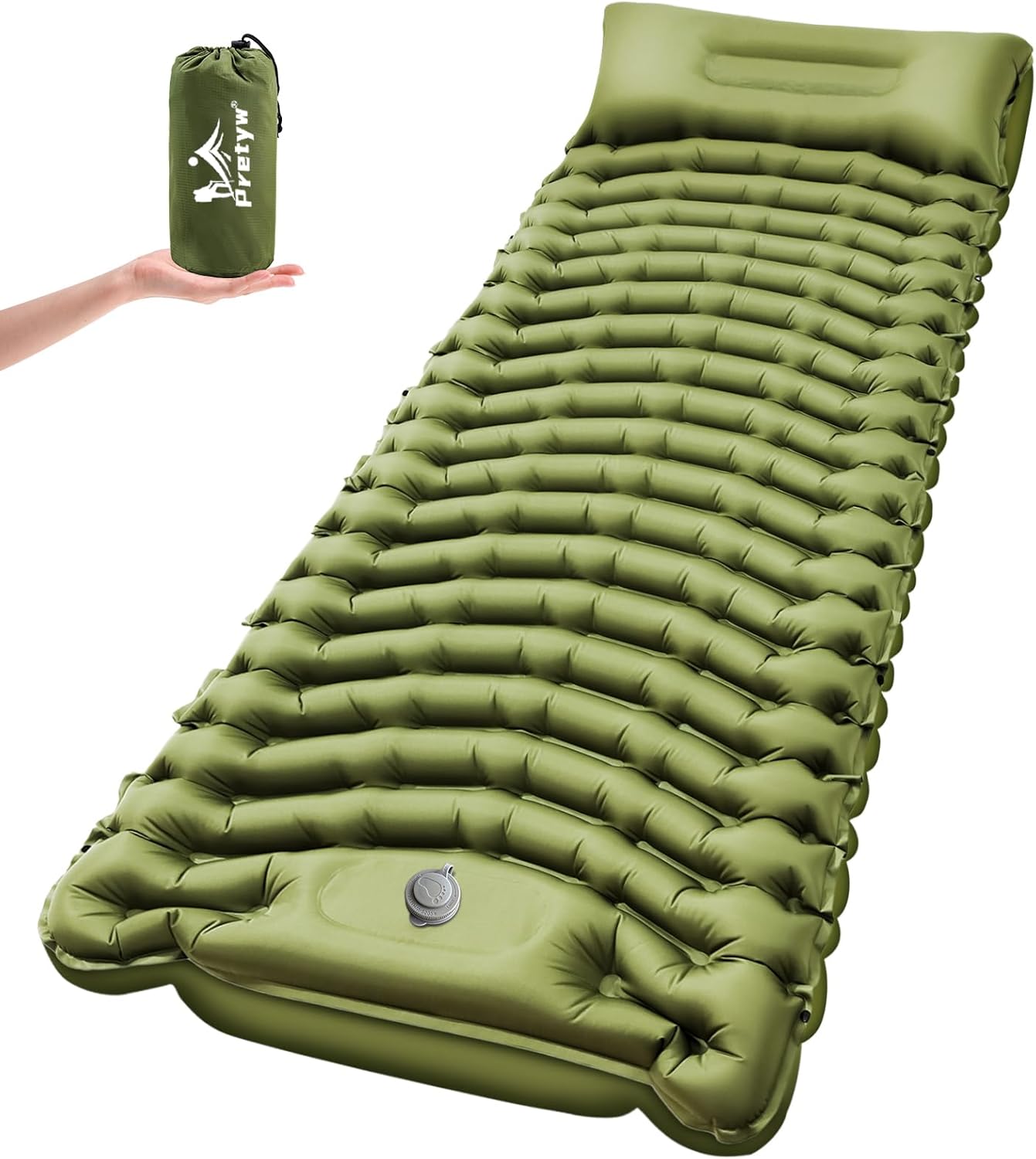
For car camping and quick setup, Pretyw D001 delivers 4 in of cushioning with a built-in pump and pillow. For backpacking, the lighter FUN PAC Camping Sleeping Pad ZW-DRCQD-XJ is a strong alternative.
Our top picks
 Best overall
Pretyw D001
Car camping and quick-setup cold weather trips
 Best for backpacking
FUN PAC Camping Sleeping Pad ZW-DRCQD-XJ
Backpacking in cold weather
 Best for heavy_sleeper
OGERY SZ-R12
Heavy sleepers and extreme cold camping
 #4 pick
Gear Doctors Ether Ultralight
Ultralight backpacking in cool to cold conditions
 #5 pick
TREKOLOGY UL R7
Backpacking and car camping in cold conditions
 Best for tall_camper
Hikenture R6.2 1201
Tall campers backpacking in cold weather
 #7 pick
Elegear CumbreX
Winter backpacking and alpine camping
 #8 pick
Elegear CumbreX SP-CP-0042-GN-EL
Winter backpacking (alternate color option)
 #9 pick
BISINNA Sleeping Pad Q3050
Ultralight winter backpacking
 #10 pick
Hikenture R6.2 1201A1
Mild cold weather backpacking
 Top weight_capacity
Wevelel Sleepingpad137
Car camping and heavy sleepers needing maximum support
 #12 pick
MalloMe SSBag-bleu
Mild weather camping with a separate pad
 Lowest weight
Therm-a-Rest Z Lite Original
Ultralight backpacking in mild cold or as a backup pad
On this page
Cold weather camping demands a sleeping pad that insulates you from the frozen ground. Thickness, construction type, and insulation design all matter. We compared manufacturer specifications to find pads that keep you warm without weighing you down. Whether you car camp, backpack, or need extra support, our picks are based on defined use cases. For more on staying warm, see our guide to best cold sleeping bags.
Comparison at a glance
Key specs · full specs in each pick| Model | length | width | thickness | weight | Link |
|---|---|---|---|---|---|
|
D001
|
79 in | 27.5 in | 4 in | 1.8 lb | View on Amazon |
|
ZW-DRCQD-XJ
|
75 in | 25 in | 3 in | 1.5 lb | View on Amazon |
|
SZ-R12
|
70.8 in | 24 in | 4.7 in | 2.5 lb | View on Amazon |
|
Ether Ultralight
|
76 in | 25 in | 3.35 in | 1.094 lb | View on Amazon |
|
UL R7
|
70.8 in | 24 in | 4 in | 2 lb | View on Amazon |
|
1201
|
78 in | 25 in | 3.2 in | 1.7 lb | View on Amazon |
|
CumbreX
|
72 in | 25 in | 4 in | 2.2 lb | View on Amazon |
|
SP-CP-0042-GN-EL
|
72 in | 25 in | 4 in | 2.2 lb | View on Amazon |
|
Q3050
|
72 in | 25 in | 3.5 in | 2 lb | View on Amazon |
|
1201A1
|
12 in | 3.5 in | 3.2 in | 1.5 lb | View on Amazon |
|
Sleepingpad137
|
77 in | 26.98 in | 3.1 in | 6.5 lb | View on Amazon |
|
SSBag-bleu
|
86.614 in | 29.528 in | - | 2.866 lb | View on Amazon |
|
040818023020
|
72 in | 20 in | 0.75 in | 0.875 lb | View on Amazon |
Best for: Car camping and quick-setup cold weather trips
Pretyw D001 is a self-inflating pad that reaches 4 in thick, offering excellent ground insulation for cold nights. The built-in pump inflates it quickly, and the integrated pillow saves packing space. At 1.8 lb, it's not the lightest, but the convenience and comfort make it a top choice for car camping and quick setups. The 79 in x 27.5 in surface gives ample room for most sleepers.
Pros
- Built-in pump and pillow
- 4 in thickness for warmth
- Self-inflating saves effort
Cons
- Heavier than backpacking pads
- No R-value listed by manufacturer
Full specifications (8)
- length
- 79 in
- width
- 27.5 in
- thickness
- 4 in
- weight
- 1.8 lb
- construction_type
- self-inflating
- built_in_pump
- Yes
- built_in_pillow
- Yes
- waterproof
- Yes
Specs: Amazon listing
Best for: Backpacking in cold weather
FUN PAC Camping Sleeping Pad ZW-DRCQD-XJ weighs just 1.5 lb and packs small, making it a strong choice for backpacking in cold conditions. It's 3 in thick with a built-in pump and pillow, and supports up to 400 lb. The self-inflating design speeds up camp setup. While slightly narrower than the top pick, its portability and warmth suit hikers who need to save weight.
Pros
- Lightweight at 1.5 lb
- Built-in pump and pillow
- High weight capacity of 400 lb
Cons
- 3 in is less than some competitors
- Narrower than some pads
Full specifications (9)
- length
- 75 in
- width
- 25 in
- thickness
- 3 in
- weight
- 1.5 lb
- construction_type
- self-inflating
- built_in_pump
- Yes
- built_in_pillow
- Yes
- waterproof
- Yes
- weight_capacity
- 400 lb
Specs: Amazon listing
Best for: Heavy sleepers and extreme cold camping
OGERY SZ-R12 is built for extreme cold with a 4.7 in thickness and a manufacturer-stated R-value of 9.0. It supports up to 440.9 lb and uses a multi-layer reflective insulation system to reduce heat loss. At 2.5 lb, it's heavier than backpacking pads, but the warmth-to-weight ratio is strong for winter camping. The included pump bag makes inflation easy.
Pros
- 4.7 in for superior insulation
- High weight capacity of 440.9 lb
- Pump bag included
Cons
- Heavier at 2.5 lb
- No built-in pump or pillow
Full specifications (7)
- length
- 70.8 in
- width
- 24 in
- thickness
- 4.7 in
- weight
- 2.5 lb
- construction_type
- inflatable
- waterproof
- Yes
- weight_capacity
- 440.9 lb
Specs: Amazon listing
Best for: Ultralight backpacking in cool to cold conditions
Gear Doctors Ether Ultralight is an ultralight inflatable pad at 1.094 lb, ideal for backpackers who prioritize weight savings. It measures 76 in x 25 in with a tapered thickness of up to 3.35 in for comfort. The ergonomic U-shape design helps prevent slipping. It supports up to 440 lb. While it lacks a built-in pump, the included pump sack works well. A good option for three-season use with cold tolerance.
Pros
- Very lightweight at 1.094 lb
- High weight capacity of 440 lb
- Ergonomic design for stability
Cons
- No built-in pump or pillow
- Thinner than dedicated cold-weather pads
Full specifications (6)
- length
- 76 in
- width
- 25 in
- thickness
- 3.35 in
- weight
- 1.094 lb
- construction_type
- inflatable
- weight_capacity
- 440 lb
Specs: Amazon listing
Best for: Backpacking and car camping in cold conditions
TREKOLOGY UL R7 offers a manufacturer-stated R-value of 7.2 and 4 in of thickness, making it a solid cold-weather choice. At 2 lb, it balances warmth and portability. The 70.8 in x 24 in surface fits most sleepers, and it supports up to 330 lb. It requires a separate pump or mouth inflation. Durable 40D nylon adds longevity.
Pros
- Good R-value for cold weather
- 4 in prevents bottoming out
- Durable construction
Cons
- No built-in pump
- Weight capacity of 330 lb may limit some users
Full specifications (8)
- length
- 70.8 in
- width
- 24 in
- thickness
- 4 in
- weight
- 2 lb
- construction_type
- inflatable
- built_in_pump
- No
- waterproof
- Yes
- weight_capacity
- 330 lb
Specs: Amazon listing
Best for: Tall campers backpacking in cold weather
Hikenture R6.2 1201 is designed for taller campers with a 78 in length and 25 in width. It has a manufacturer-stated R-value of 6.2 and 3.2 in thickness, providing decent cold-weather insulation. At 1.7 lb, it's lightweight for its size. The included pump sack doubles as a storage bag. A good fit for backpackers who need extra length.
Pros
- Long length for tall campers
- Lightweight at 1.7 lb
- Pump sack included
Cons
- Only 3.2 in thick
- No built-in pump or pillow
Full specifications (5)
- length
- 78 in
- width
- 25 in
- thickness
- 3.2 in
- weight
- 1.7 lb
- construction_type
- inflatable
Specs: Amazon listing
Best for: Winter backpacking and alpine camping
Elegear CumbreX features a manufacturer-stated R-value of 9 and 4 in thickness, matching the top insulation levels. It weighs 2.2 lb and packs compactly. The mummy shape saves space, and the 20D nylon is durable. It requires a separate pump sack (included). A strong choice for winter backpackers who want maximum warmth without excessive weight.
Pros
- High R-value for extreme cold
- 4 in for comfort
- Compact pack size
Cons
- No built-in pump
- Mummy shape may feel restrictive
Full specifications (7)
- length
- 72 in
- width
- 25 in
- thickness
- 4 in
- weight
- 2.2 lb
- construction_type
- inflatable
- built_in_pump
- No
- waterproof
- Yes
Specs: Amazon listing
Best for: Winter backpacking (alternate color option)
Elegear CumbreX SP-CP-0042-GN-EL is identical in specs to the other Elegear CumbreX model: 4 in thick, 2.2 lb, and a manufacturer-stated R-value of 9. It offers the same insulation and durability. This entry provides an alternative color or packaging option. Choose whichever fits your preference.
Pros
- Same high R-value and thickness
- Lightweight for winter use
Cons
- No built-in pump
- Mummy shape
Full specifications (7)
- length
- 72 in
- width
- 25 in
- thickness
- 4 in
- weight
- 2.2 lb
- construction_type
- inflatable
- built_in_pump
- No
- waterproof
- Yes
Specs: Amazon listing
Best for: Ultralight winter backpacking
BISINNA Sleeping Pad Q3050 is an ultralight inflatable pad with a manufacturer-stated R-value of 9. It weighs 2 lb and packs to water-bottle size. At 3.5 in thick, it provides good ground insulation. The 20D nylon is puncture-resistant. The included pump sack inflates it quickly. A great option for backpackers who need extreme warmth in a small package.
Pros
- Very lightweight at 2 lb
- High R-value for cold
- Compact pack size
Cons
- No built-in pump or pillow
- Thinner than some competitors
Full specifications (6)
- length
- 72 in
- width
- 25 in
- thickness
- 3.5 in
- weight
- 2 lb
- construction_type
- inflatable
- waterproof
- Yes
Specs: Amazon listing
Best for: Mild cold weather backpacking
Hikenture R6.2 1201A1 offers a manufacturer-stated R-value of 6.2 and 3.2 in thickness. It weighs 1.5 lb and uses aluminum film for heat reflection. The included pump sack doubles as a storage bag. While not as warm as higher R-value pads, it's a budget-friendly option for mild cold conditions. Note: the packed dimensions listed are 12 in x 3.5 in, which may be a storage size.
Pros
- Lightweight at 1.5 lb
- Pump sack included
Cons
- Only 3.2 in thick
- Lower R-value than top picks
Full specifications (5)
- length
- 12 in
- width
- 3.5 in
- thickness
- 3.2 in
- weight
- 1.5 lb
- construction_type
- inflatable
Specs: Amazon listing
Best for: Car camping and heavy sleepers needing maximum support
Wevelel Sleepingpad137 is a self-inflating memory foam pad with a manufacturer-stated R-value of 9.5 and a weight capacity of 800 lb. At 6.5 lb, it's the heaviest pad here, but the foam construction provides exceptional support and insulation. It measures 77 in x 26.98 in and includes a built-in pillow. Best for car campers who prioritize comfort and don't mind the bulk.
Pros
- Highest weight capacity at 800 lb
- Self-inflating with memory foam
- Built-in pillow
Cons
- Very heavy at 6.5 lb
- Bulky for backpacking
Full specifications (7)
- length
- 77 in
- width
- 26.98 in
- thickness
- 3.1 in
- weight
- 6.5 lb
- construction_type
- self-inflating
- built_in_pillow
- Yes
- weight_capacity
- 800 lb
Specs: Amazon listing
Best for: Mild weather camping with a separate pad
MalloMe SSBag-bleu is a rectangular sleeping bag, not a pad, but it's included for comparison. It measures 86.614 in x 29.528 in and weighs 2.866 lb. The waterproof shell protects from moisture. While it provides some ground insulation, it's not a substitute for a dedicated sleeping pad in cold weather. Use it with a pad for best results.
Pros
- Long length for tall campers
- Waterproof outer shell
Cons
- Not a sleeping pad
- No thickness or R-value data
Full specifications (4)
- length
- 86.614 in
- width
- 29.528 in
- weight
- 2.866 lb
- waterproof
- Yes
Specs: Amazon listing
Best for: Ultralight backpacking in mild cold or as a backup pad
Therm-a-Rest Z Lite Original is a closed-cell foam pad weighing just 0.875 lb. It's only 0.75 in thick, so it offers minimal insulation compared to inflatable pads. However, it's indestructible, never leaks, and works as a sit pad or backup. The accordion fold makes it easy to pack. Best for ultralight hikers who accept the warmth trade-off.
Pros
- Lightest at 0.875 lb
- Durable and never leaks
- Compact folding design
Cons
- Very thin at 0.75 in
- Low insulation for cold weather
Full specifications (5)
- length
- 72 in
- width
- 20 in
- thickness
- 0.75 in
- weight
- 0.875 lb
- construction_type
- foam
Specs: Amazon listing
How to choose
R-value: how much insulation do you need?
R-value measures a pad's resistance to heat loss. For cold weather camping, look for an R-value of 4 or higher. Pads with R-values above 7, like those from OGERY and Elegear, are suited for winter conditions. Manufacturer claims vary, so compare thickness and construction as well. A thicker pad generally traps more air and provides better insulation.
Thickness: comfort and ground separation
Thicker pads keep you further from the cold ground and smooth out bumps. For cold weather, aim for at least 4.7 in (as seen on the OGERY) or more. Thinner pads like the Therm-a-Rest Z Lite at 0.75 in offer less insulation but are lighter. Balance thickness with your need for warmth and packability.
Construction type: self-inflating, inflatable, or foam
Self-inflating pads (like the Pretyw and Wevelel) combine foam with air for easy setup and good insulation. Inflatable pads (like the Elegear and BISINNA) pack smaller and can be very warm, but require a pump or breath. Foam pads (like the Therm-a-Rest) are durable and never leak but offer the least insulation. Choose based on your setup style and weight priorities.
Weight and packability for backpacking
If you carry your pad on the trail, weight matters. Pads under 1.5 lb (like the FUN PAC and Gear Doctors) are backpacking-friendly. Heavier pads over 6.5 lb are best for car camping. Also consider packed size: inflatable pads compress smaller than foam or self-inflating ones.
Extra features: built-in pump, pillow, and width
Built-in pumps save time and lung power, especially in cold weather. Integrated pillows reduce packing bulk. Wider pads (over 27.5 in) offer more comfort for side sleepers. Tall campers should check length: pads like the Hikenture at 78 in accommodate longer frames. Prioritize features that match your camping style.
Frequently asked questions
What R-value is good for cold weather camping?
For temperatures below freezing, an R-value of 5 or higher is recommended. Pads with R-values of 7 to 9, like the OGERY SZ-R12 and Elegear CumbreX, are designed for winter conditions. Lower R-values work for mild cold but may not keep you warm on snow or frozen ground.
Can I use a foam sleeping pad in winter?
Yes, but foam pads like the Therm-a-Rest Z Lite have a low R-value (around 1.7) and thin profile. They provide minimal insulation and are best used as a backup or combined with an inflatable pad. For serious cold, an inflatable or self-inflating pad with higher thickness is better.
How thick should a cold weather sleeping pad be?
Aim for at least 4.7 in for winter camping. Thicker pads trap more air and provide better insulation from the cold ground. Pads under 0.75 in are not sufficient for cold weather unless used in combination with other insulation.
Are self-inflating pads warm enough for winter?
Many self-inflating pads, like the Pretyw D001 and Wevelel, have thick foam cores that provide good insulation. Check the manufacturer's R-value if available. Self-inflating pads are generally warmer than thin foam pads but may not match the highest R-value inflatable pads. They are a solid choice for car camping and moderate cold.
How do I inflate a sleeping pad without a pump?
You can inflate most pads by mouth, but this introduces moisture that can reduce insulation. Many pads include a pump sack or dry bag that doubles as an inflation system. For pads without a built-in pump, like the TREKOLOGY UL R7, use the included pump sack or a separate inflator. Self-inflating pads require minimal lung power.
Bottom line
For car camping and quick setup, Pretyw D001 offers the best balance of thickness and convenience. Backpackers should consider FUN PAC Camping Sleeping Pad ZW-DRCQD-XJ for its light weight or OGERY SZ-R12 for extreme cold. Heavy sleepers and those needing high weight capacity will appreciate Wevelel Sleepingpad137. The Therm-a-Rest Z Lite Original is a reliable ultralight backup. Choose based on your warmth needs and how you camp.
Related articles
-
Best Sleeping Pad Pump
Compare the best sleeping pad pumps with built-in foot pumps and standalone pump sacks. Find the right pump for backpacking, car camping, and more.
Nov 2, 2026
-
Best Sleeping Bag and Pad Combo
Compare the best sleeping bag and pad combos for camping. Find top picks for backpacking, car camping, tall campers, and more based on specs and use cases.
Nov 2, 2026
-
Best Sleep System for Winter Camping
Find the best sleep system for winter camping. Compare modular bags, lightweight options, and heated models based on specs. Top pick for warmth and versatility.
Nov 2, 2026
-
Best Camping Cot for Heavy Person
Find the best camping cot for heavy person. Compare weight capacities, widths, and features for comfortable camping sleep. Top picks for heavy sleepers and tall campers.
Nov 2, 2026


