 Pitch & Pack
Quick answer
For ultralight backpacking, Naturehike ZY20 is our top pick at just 0.281 lb. It adds hygiene without bulk. For tall campers, the Sea to Summit Reactor ASL031071-190804 offers extra length and insulation.
Our top picks
 Best overall
Naturehike ZY20
Ultralight backpacking and hygiene
 Best for tall_camper
Sea to Summit Reactor ASL031071-190804
Tall campers needing extra warmth
 #3 pick
The Friendly Swede Sleeping Bag Liner
Car camping and hostel use
 #4 pick
tuphen ERP-SDND
Cold weather car camping
 #5 pick
Stone Glacier Chilkoot 70021-OSFM
Backpacking in cold, dry climates
 #6 pick
MalloMe SSBag-bleu
Car camping in wet conditions
 #7 pick
Sea to Summit Boab
Car camping and mild weather backpacking
 #8 pick
Stone Glacier Chilkoot 0 70020-GG-OSFM
Cold weather backpacking
 #9 pick
Big Agnes Anthracite BTMA20LL26
3-season backpacking
 #10 pick
Kelty Wayback 35431625RFP
Car camping and nostalgic comfort
 #11 pick
Coleman Brazos 2205665
Budget car camping
 #12 pick
Coleman North Rim 2205651
Cold weather car camping
 #13 pick
Browning McKinley 4853458
Extreme cold car camping
On this page
Denier measures fabric thickness and durability. For sleeping bags, lower denier means lighter weight and better packability, while higher denier adds toughness. We compared manufacturer specifications to find the best denier for sleeping bags across different uses, from ultralight backpacking to car camping. Whether you need a liner to protect your bag or a standalone sleep system, understanding denier helps you choose the right balance of weight and durability. Best compact sleeping bags can also help if pack size is a priority.
Comparison at a glance
Key specs · full specs in each pick| Model | length | width | thickness | weight | Link |
|---|---|---|---|---|---|
|
ZY20
|
82.7 in | 31.5 in | - | 0.281 lb | View on Amazon |
|
ASL031071-190804
|
85.04 in | 31.5 in | - | 0.84 lb | View on Amazon |
|
re-Tofta-gry-1p-zipper-00
|
86 in | 41 in | - | 1.1 lb | View on Amazon |
|
ERP-SDND
|
86 in | 41 in | - | 2.6 lb | View on Amazon |
|
70021-OSFM
|
78 in | 32 in | - | 2.188 lb | View on Amazon |
|
SSBag-bleu
|
86.614 in | 29.528 in | - | 2.866 lb | View on Amazon |
|
B0DSVH2GND
|
85 in | 29.9 in | 3 in | 3.07 lb | View on Amazon |
|
70020-GG-OSFM
|
78 in | 32 in | - | 2.625 lb | View on Amazon |
|
BTMA20LL26
|
78 in | 65 in | - | 3.125 lb | View on Amazon |
|
35431625RFP
|
84 in | 36 in | - | 6 lb | View on Amazon |
|
2205665
|
75 in | 33 in | - | 5.3 lb | View on Amazon |
|
2205651
|
82 in | 32 in | - | - | View on Amazon |
|
4853458
|
90 in | 36 in | - | 8.8 lb | View on Amazon |
Best for: Ultralight backpacking and hygiene
Naturehike ZY20 is an ultralight sleeping bag liner weighing only 0.281 lb. Its low-stretch nylon fabric is soft and breathable, making it ideal for backpackers who want to keep their sleeping bag clean without adding weight. It packs down small and is machine washable.
Pros
- Ultralight at 0.281 lb
- Soft faux velvet fabric
- Machine washable
Cons
- Thinner than insulated liners
- Not for adding warmth
Best for: Tall campers needing extra warmth
Sea to Summit Reactor ASL031071-190804 is an insulated liner that adds warmth to any sleeping bag. It uses Thermolite Pro hollow-core fibers to reflect body heat. At 85.04 in long, it fits tall campers. The drawcord footbox integrates with sleeping bag footboxes.
Pros
- Adds warmth without bulk
- 85.04 in length for tall users
- Odor control technology
Cons
- Heavier than non-insulated liners at 0.84 lb
- Not a standalone bag
Best for: Car camping and hostel use
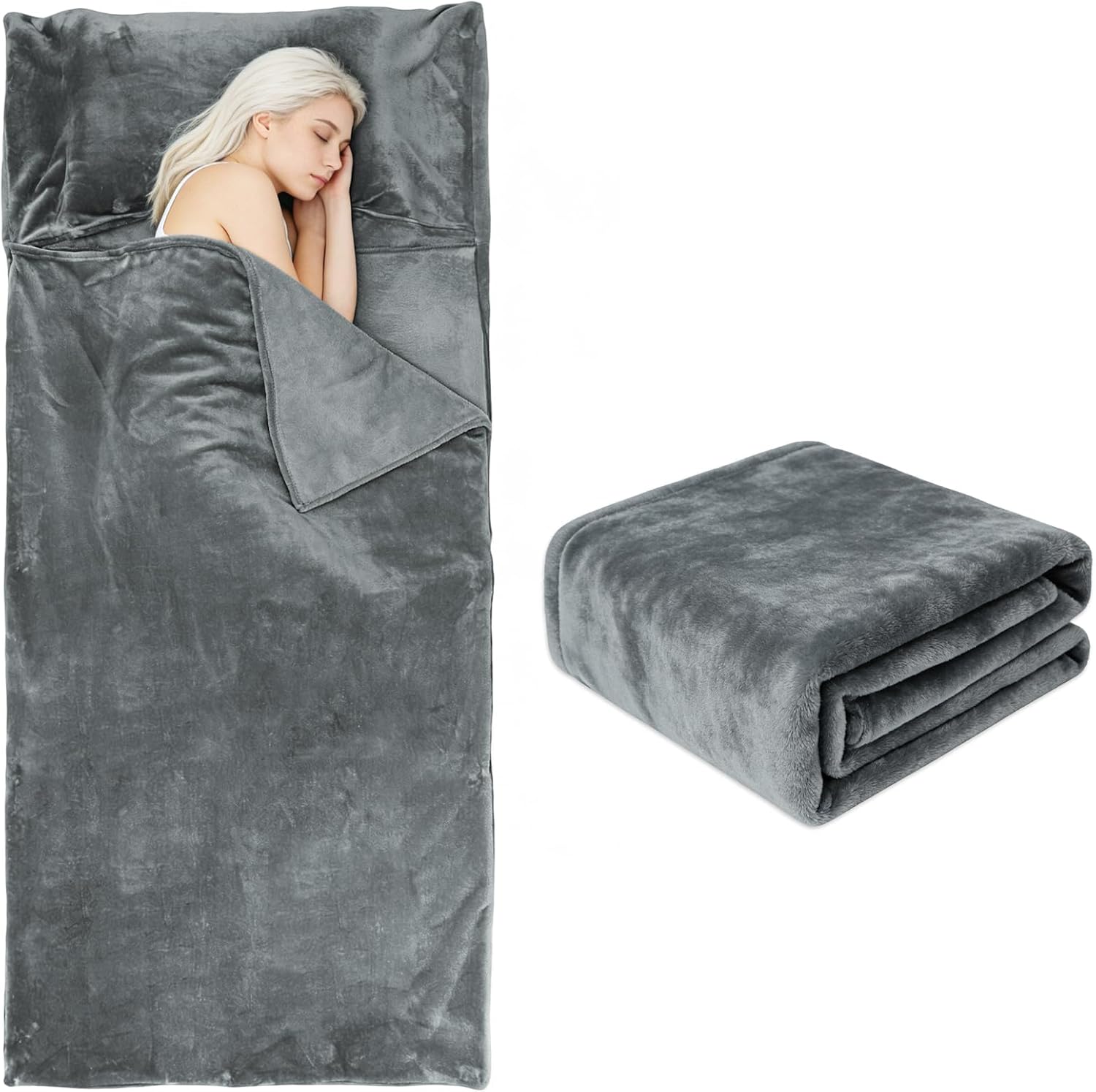
The Friendly Swede Sleeping Bag Liner is a microfiber sleep sack with a pillow pocket and full-length zipper. It measures 86 in x 41 in for generous space. The cotton-soft microfiber adds warmth and protects your sleeping bag from dirt. It packs down to a small stuff sack.
Pros
- Roomy 41 in width
- Pillow pocket keeps pillow in place
- Full-length zipper for easy entry
Cons
- Heavier than ultralight liners at 1.1 lb
- Microfiber may not breathe as well as nylon
Best for: Cold weather car camping
tuphen ERP-SDND is a flannel liner with a dual-layer design and built-in pillow pocket. The flannel fabric is soft and thick at 2.6 lb. It can be used as a standalone sleep sack or inside a sleeping bag. The invisible side zipper opens quietly.
Pros
- Soft flannel fabric
- Built-in pillow pocket
- Can be used standalone
Cons
- Heavy at 2.6 lb
- Not as packable as nylon liners
Full specifications (4)
- length
- 86 in
- width
- 41 in
- weight
- 2.6 lb
- built_in_pillow
- Yes
Specs: Amazon listing
Best for: Backpacking in cold, dry climates
Stone Glacier Chilkoot 70021-OSFM is a down sleeping bag with 850+ fill power and a Pertex Quantum shell. It weighs 2.188 lb and measures 78 in long. The shell is lightweight and water-resistant, ideal for backpacking in cold conditions.
Pros
- Lightweight down insulation
- Water-resistant shell
- Compact when compressed
Cons
- Expensive
- Not for wet conditions without a bivvy
Best for: Car camping in wet conditions
MalloMe SSBag-bleu is a rectangular sleeping bag with a waterproof outer shell and synthetic fill. It weighs 2.866 lb and fits adults up to 86.614 in long. The waterproof shell protects against damp ground. It comes with a compression sack.
Pros
- Waterproof outer shell
- Roomy rectangular shape
- Machine washable
Cons
- Heavy for backpacking
- Synthetic insulation loses loft over time
Full specifications (4)
- length
- 86.614 in
- width
- 29.528 in
- weight
- 2.866 lb
- waterproof
- Yes
Specs: Amazon listing
Best for: Car camping and mild weather backpacking
Sea to Summit Boab is a tapered rectangular synthetic bag designed for side-sleepers. It measures 85 in x 29.9 in and weighs 3.07 lb. The full side zipper converts it into a blanket. Made with recycled materials and a non-PFAS DWR finish.
Pros
- Roomy for side-sleepers
- Converts to blanket
- Eco-friendly materials
Cons
- Heavier than mummy bags
- Not for extreme cold
Best for: Cold weather backpacking
Stone Glacier Chilkoot 0 70020-GG-OSFM is an ultralight down sleeping bag rated for colder temperatures. It uses 850+ fill goose down and a Pertex Quantum shell. At 2.625 lb, it's one of the lightest options for its warmth. Length is 78 in.
Pros
- Very lightweight for a cold-weather bag
- High-quality down
- Water-resistant shell
Cons
- Expensive
- Down loses insulation when wet
Best for: 3-season backpacking
Big Agnes Anthracite BTMA20LL26 is a lightweight mummy bag with recycled synthetic insulation. It weighs 3.125 lb and has a contoured hood and draft collar. The long version fits campers up to 78 in. The shell is made from recycled polyester with a PFAS-free DWR.
Pros
- Lightweight and compressible
- Recycled materials
- Draft collar seals warmth
Cons
- Mummy shape may feel restrictive
- Not as warm as down for weight
Best for: Car camping and nostalgic comfort
Kelty Wayback 35431625RFP is a rectangular sleeping bag with plaid flannel lining and a built-in blanket. It weighs 6 lb and measures 84 in x 36 in. The blanket can be snapped up for extra warmth. Made with recycled insulation and organic cotton flannel.
Pros
- Classic flannel feel
- Built-in blanket for adjustable warmth
- Eco-friendly materials
Cons
- Very heavy at 6 lb
- Not packable for backpacking
Best for: Budget car camping
Coleman Brazos 2205665 is a rectangular sleeping bag for cool weather. It measures 75 in x 33 in and weighs 5.3 lb. Features include a Thermolock draft tube and Fiberlock construction to prevent insulation shifting. Includes a stuff sack.
Pros
- Affordable
- Draft tube keeps warmth in
- Easy to pack with roll control
Cons
- Heavy and bulky
- Not for tall campers (75 in length)
Best for: Cold weather car camping
Coleman North Rim 2205651 is a mummy sleeping bag rated for cold weather. It measures 82 in x 32 in and features Coletherm hollow polyester insulation. The adjustable hood and Thermolock draft tube help retain heat. Designed for campers up to 82 in.
Pros
- Warm for cold weather
- Adjustable hood
- Draft tube
Cons
- No weight listed, likely heavy
- Mummy shape may be snug
Best for: Extreme cold car camping
Browning McKinley 4853458 is a heavy-duty hooded rectangle sleeping bag rated for cold weather. It measures 90 in x 36 in and weighs 8.8 lb. Two-layer offset construction eliminates cold spots. The brushed polyester liner adds comfort.
Pros
- Very warm for cold weather
- Large size fits tall campers
- Durable shell
Cons
- Extremely heavy at 8.8 lb
- Not for backpacking
How to choose
How denier affects weight and packability
Denier (D) refers to the thickness of the fabric fibers. Lower denier fabrics are lighter and more compressible, making them ideal for backpacking where every ounce counts. Higher denier fabrics are heavier but more resistant to abrasion and punctures. For ultralight liners like Naturehike ZY20, a low-denier nylon keeps weight minimal. If you're carrying your gear miles into the backcountry, prioritize lower denier shells. For car camping, higher denier adds durability without the weight penalty.
Denier and durability: matching fabric to terrain
A sleeping bag's shell denier determines how well it withstands rough use. A very low denier fabric can tear if snagged on branches or zippers, while a higher denier fabric handles more abuse. Browning McKinley 4853458 uses a heavy-duty shell for cold-weather car camping where weight isn't a concern. If you sleep in a tent on a pad, lower denier is fine. If you're cowboy camping or using a bivvy, a higher denier shell adds peace of mind. Best Colorado sleeping bags often feature durable shells for rocky terrain.
Breathability and moisture management
Lower denier fabrics tend to be more breathable because the weave is less dense. This helps wick moisture away from your body and reduces condensation inside the bag. Liners like Sea to Summit Reactor ASL031071-190804 use Thermolite fibers that balance warmth and breathability. For humid conditions or if you sleep hot, a lower denier shell or liner can improve comfort. Higher denier fabrics may trap moisture, so look for breathable membranes or DWR finishes if you expect damp conditions.
Denier in sleeping bag liners vs. standalone bags
Liners typically use lower denier fabrics because they are worn inside a bag and don't need to resist abrasion. The Friendly Swede Sleeping Bag Liner uses a microfiber that is soft and lightweight. Standalone sleeping bags need a shell that balances weight and protection. Mummy bags like Big Agnes Anthracite BTMA20LL26 use recycled polyester ripstop for a good compromise. If you plan to use a liner alone in warm weather, a slightly higher denier can prevent tears from zippers or ground contact.
Frequently asked questions
What denier is best for a sleeping bag liner?
For a liner, a low to moderate denier is common. Very low denier is ultralight and packable, ideal for backpacking. A slightly higher denier adds a bit more durability for hostel or car camping use. The best denier depends on how much weight you're willing to carry versus how much abrasion resistance you need.
Does higher denier mean a warmer sleeping bag?
No, denier does not directly affect warmth. Warmth comes from the insulation (down or synthetic) and the bag's design. Denier affects the shell's weight, durability, and breathability. A higher denier shell may feel slightly warmer if it blocks wind better, but the insulation is the primary factor.
Can I use a low-denier sleeping bag for car camping?
Yes, but low-denier fabrics are more prone to tears from zippers, tent poles, or rough ground. For car camping where weight isn't critical, a higher denier bag will last longer. If you already have a low-denier bag, use a ground tarp and handle it carefully.
What denier is used in ultralight backpacking bags?
Ultralight backpacking bags often use very low denier fabrics for the shell and liner. For example, many high-end down bags use a low denier Pertex Quantum. These fabrics save significant weight but require careful use. If you're new to ultralight gear, consider a moderate denier bag for a better balance of weight and durability. Best compactable sleeping bags often feature these low-denier shells.
How does denier relate to waterproofing?
Denier alone doesn't make a fabric waterproof. Waterproofing comes from coatings or membranes like DWR or laminates. A low-denier fabric can be waterproof if treated, but it may be less durable. Higher denier fabrics can hold heavier coatings. For wet conditions, look for a bag with a waterproof shell regardless of denier, like MalloMe SSBag-bleu which has a waterproof outer shell.
Bottom line
The best denier for your sleeping bag depends on your camping style. For ultralight backpacking, Naturehike ZY20 offers the lightest option. Tall campers should consider Sea to Summit Reactor ASL031071-190804 for extra length and warmth. Car campers who prioritize durability can choose Browning McKinley 4853458 or Kelty Wayback 35431625RFP. Match the denier to your terrain and pack weight for the best sleep outdoors. Best cotton sleeping bags are another option if you prefer natural fabrics.
Related articles
-
Best Sleeping Pad Pump
Compare the best sleeping pad pumps with built-in foot pumps and standalone pump sacks. Find the right pump for backpacking, car camping, and more.
Nov 2, 2026
-
Best Sleeping Bag and Pad Combo
Compare the best sleeping bag and pad combos for camping. Find top picks for backpacking, car camping, tall campers, and more based on specs and use cases.
Nov 2, 2026
-
Best Sleep System for Winter Camping
Find the best sleep system for winter camping. Compare modular bags, lightweight options, and heated models based on specs. Top pick for warmth and versatility.
Nov 2, 2026
-
Best Camping Cot for Heavy Person
Find the best camping cot for heavy person. Compare weight capacities, widths, and features for comfortable camping sleep. Top picks for heavy sleepers and tall campers.
Nov 2, 2026


