 Pitch & Pack
Quick answer
The best hiking boots for ice overall are Oboz Bridger 82501. Its leather upper, rubber outsole and insulated build suit cold, wet trails where you want warm, dry feet. For slick, wet ice, look at MUCK Arctic Ice Mid AVMVA-000, whose outsole is described by the maker as built for wet ice traction.
Our top picks
 Best overall
Oboz Bridger 82501
Cold, wet day hikes and icy commutes
 Best for fast and light
Oboz Bridger 82202
Women hikers moving fast in cold air
 #3 pick
Columbia Transverse Hike 206740
Fast hikes on slushy, wet trails
 #4 pick
MUCK Arctic Ice Mid AVMVA-000
Wet, glossy ice and winter commutes
 #5 pick
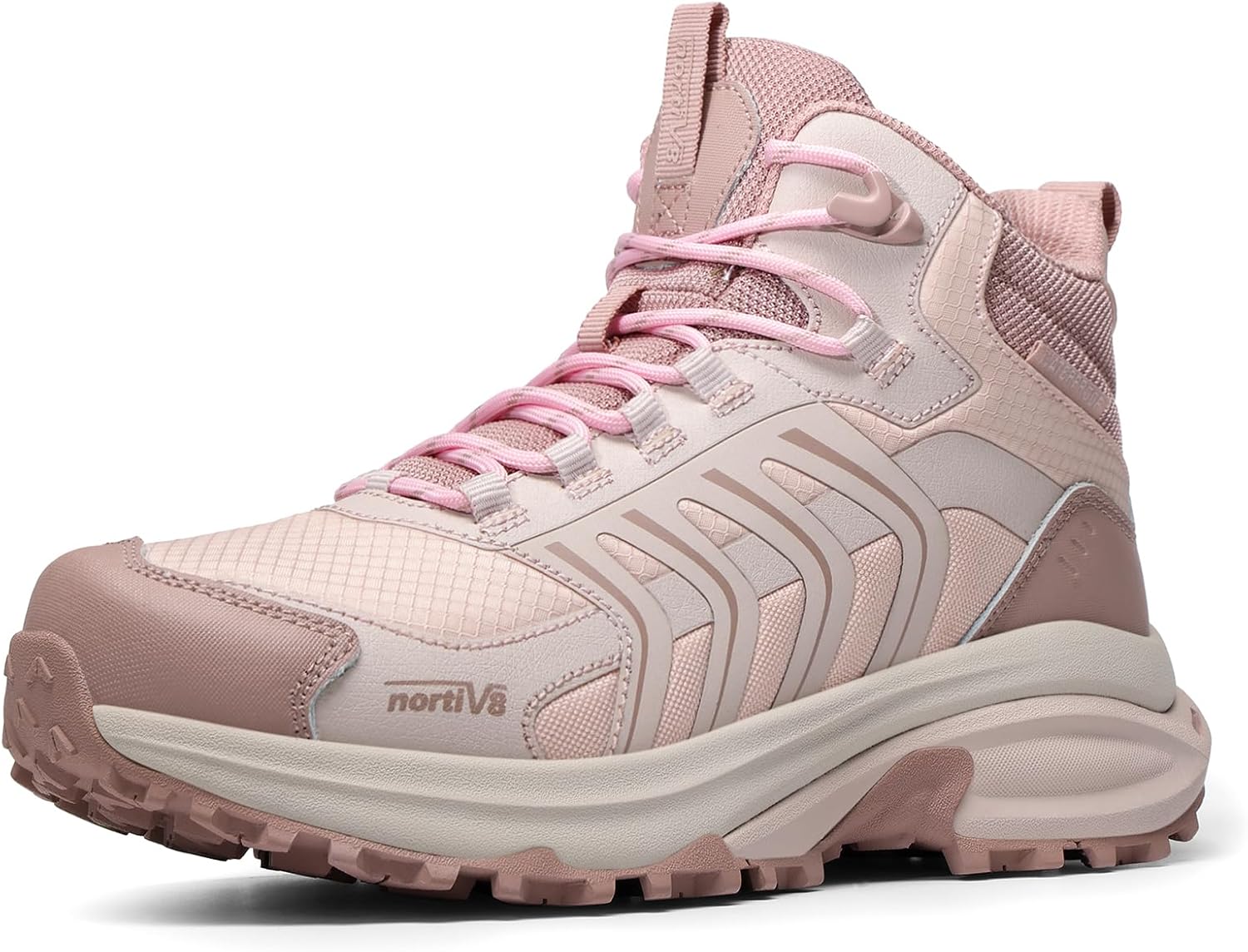
NORTIV8 Women's Waterproof Hiking Boots
Women who want a simple waterproof trail boot
 #6 pick
NORTIV8 Js19005m
Cold-weather day hikes on packed trails
 #7 pick
ROCKAMRK
Deep snow, slush and cold commutes
On this page
Choosing boots for icy trails is less about one magic feature and more about how a pair handles cold, wet ground. You want a waterproof build, an outsole that grips packed snow, and enough warmth for the temperatures you walk in without cooking your feet.
This guide is for winter hikers, icy-path commuters, and anyone walking a dog through slush. We compared published specifications for seven boots and matched each pair to a defined use case, from fast-and-light day hikes to deep-snow walking. Every claim here comes from manufacturer data. If you also want background on membranes, our comparison of GORE-TEX waterproof hiking boots is a useful next read.
Comparison at a glance
Key specs · full specs in each pick| Model | shaft_height | upper_material | breathable | insulated | Link |
|---|---|---|---|---|---|
|
82501
|
- | leather | Yes | Yes | View on Amazon |
|
82202
|
- | leather | Yes | Yes | View on Amazon |
|
206740
|
- | combination | Yes | - | View on Amazon |
|
AVMVA-000
|
mid | synthetic | - | - | View on Amazon |
|
B0C9JB71KG
|
- | leather | - | - | View on Amazon |
|
Js19005m
|
- | combination | - | - | View on Amazon |
|
B07Y3VDD8L
|
- | - | - | - | View on Amazon |
Best for: Cold, wet day hikes and icy commutes
Oboz Bridger 82501 is the most complete cold-weather package here: a leather upper, a waterproof membrane the maker says still lets sweat vapor escape, and a rubber outsole for grip on packed trails. Insulation is listed, which matters on long, slow walks in cold air.
Nothing about it is specialized, and that is the point. It handles a snowy commute, a winter day hike, and a walk on a frozen lake path with the same composure. Our use-case match also places it in the fast-and-light group, so it is not a heavy mountaineering boot. If you want the same approach in a women's build, Oboz Bridger 82202 is the direct counterpart.
Pros
- Leather upper with a breathable waterproof membrane
- Insulation listed for cold-weather walking
- Rubber outsole and a well-rounded build
Cons
- No shaft height published, so coverage is unclear
- More warmth than mild spring hikes need
Full specifications (5)
- waterproof
- Yes
- upper_material
- leather
- outsole_material
- rubber
- breathable
- Yes
- insulated
- Yes
Specs: Amazon listing
Best for: Women hikers moving fast in cold air
Oboz Bridger 82202 takes the Oboz recipe and shapes it for women: the same leather upper, rubber outsole, and a waterproof, breathable membrane. The maker lists insulation, so it is built for cold air, not just cold ground.
Our use-case match places it in the fast-and-light group, which suits hikers who keep a steady pace and do not want a stiff mountaineering block on their feet. It shares its strengths with Oboz Bridger 82501 and its unknowns too, since no shaft height is published for either boot.
Pros
- Women's cut of a proven leather waterproof design
- Insulation listed for winter wear
- Matched to fast-and-light hiking
Cons
- No shaft height published
- Insulation makes it a cold-weather-only pick
Full specifications (5)
- waterproof
- Yes
- upper_material
- leather
- outsole_material
- rubber
- breathable
- Yes
- insulated
- Yes
Specs: Amazon listing
Best for: Fast hikes on slushy, wet trails
Columbia Transverse Hike 206740 reads as the lightest option on paper: a combination upper of leather and mesh, a waterproof and breathable build, and a rubber outsole. The maker describes the construction as suited to prolonged exposure to moderate rain and snow, which fits slushy trails better than deep drifts.
No insulation is published for this pair, so treat it as a shell against wet ground rather than a warm boot. Our use-case match puts it in the fast-and-light group, and that is where it makes sense: quick hikes where your own effort keeps you warm.
Pros
- Combination leather and mesh upper saves weight
- Waterproof, breathable construction listed
- Rubber outsole for mixed wet terrain
Cons
- No insulation published, so it is a shell
- Shaft height not published
Full specifications (4)
- waterproof
- Yes
- upper_material
- combination
- outsole_material
- rubber
- breathable
- Yes
Specs: Amazon listing
Best for: Wet, glossy ice and winter commutes
MUCK Arctic Ice Mid AVMVA-000 is the pick when the trail is closer to a skating rink. It has a mid shaft, a synthetic upper with extended rubber coverage, and a rubber outsole that the maker describes as designed for wet ice rather than packed snow.
That focus is also the trade-off. Breathability and insulation are not published for this pair, so it reads as a protective winter boot for commutes, ice fishing, and slow walks rather than a fast day-hike boot. If your ice is wet and glossy, start here.
Pros
- Mid shaft with extended rubber coverage
- Outsole described as built for wet ice
- Waterproof build for slush and snow
Cons
- Breathability not published
- Insulation not published, so warmth is unclear
- Not matched to fast-and-light use
Full specifications (4)
- waterproof
- Yes
- shaft_height
- mid
- upper_material
- synthetic
- outsole_material
- rubber
Specs: Amazon listing
Best for: Women who want a simple waterproof trail boot
NORTIV8 Women's Waterproof Hiking Boots is a straightforward women's boot: a leather upper finished in suede, a rubber outsole, and a waterproof membrane behind it all. The maker also points to a protective toe cap, which helps when you kick through crusted snow or clip a hidden rock.
Neither insulation nor shaft height is published, so think of it as a waterproof trail boot that copes with cold, wet ground rather than a dedicated snow boot. For women who want a plain, light hiking boot for icy paths and wet trails, it covers the essentials.
Pros
- Waterproof membrane with a leather upper
- Protective toe cap for crusted snow
- Rubber outsole
Cons
- No insulation published
- Shaft height not published, so coverage is unknown
Full specifications (3)
- waterproof
- Yes
- upper_material
- leather
- outsole_material
- rubber
Specs: Amazon listing
Best for: Cold-weather day hikes on packed trails
NORTIV8 Js19005m follows the same plan for men: a combination upper of suede and faux leather, a waterproof membrane, and a rubber outsole. The maker lists a rubber toe cap and a reinforced heel, both useful when ice hides roots and rocks underfoot.
Like its women's counterpart, it publishes no insulation or shaft height. That makes it a wet-weather hiking boot first and a winter boot second. On a cold but not brutal day, with thick socks, it is a sensible choice for icy towpaths and packed trails.
Pros
- Waterproof membrane construction
- Rubber toe cap and reinforced heel
- Combination upper with a rubber outsole
Cons
- Insulation not published
- Shaft height not published
Full specifications (3)
- waterproof
- Yes
- upper_material
- combination
- outsole_material
- rubber
Specs: Amazon listing
Best for: Deep snow, slush and cold commutes
ROCKAMRK offers the most coverage here: the maker describes a seam-sealed waterproof build with mid-calf coverage and a fur lining for warmth, plus a rubber outsole listed as non-slip.
Waterproofing and outsole material are the confirmed specs, so treat the warmth and height claims as the manufacturer's description rather than published data. It suits plowed sidewalks, slushy commutes, and standing around in cold air more than a fast hike. If your winter is about deep snow rather than icy singletrack, this is the shape to look for.
Pros
- Seam-sealed waterproof build
- Mid-calf coverage described by the maker
- Fur lining for warmth
Cons
- Upper material not published
- Breathability and insulation not published
- Not matched to hiking use cases
How to choose
Waterproofing is the first spec to check
Slush soaks through fabric faster than dry snow does, and wet feet get cold quickly. Every boot here is listed as waterproof, but the method varies: a membrane behind leather or suede, a seam-sealed shell, or full rubber coverage on the lower half.
Favor a breathable membrane if you move fast. A boot that blocks water and traps sweat leaves your socks damp anyway, which defeats the point. Oboz Bridger 82501 and Columbia Transverse Hike 206740 both list breathable, waterproof builds, and both suit long days better than a plain rubber shell.
Upper material: leather, synthetic, or a mix
Leather uppers, listed on Oboz Bridger 82501, Oboz Bridger 82202 and NORTIV8 Women's Waterproof Hiking Boots, resist abrasion and hold their shape over a few seasons. Combination uppers on Columbia Transverse Hike 206740 and NORTIV8 Js19005m pair leather panels with mesh, which trims weight and adds venting. MUCK Arctic Ice Mid AVMVA-000 lists a synthetic upper with extended rubber coverage, a design built to shrug off slush.
Neither approach wins on ice. Leather feels stiffer at first and needs cleaning to keep its water repellency, while mesh-heavy builds feel lighter and drier on the move. Our comparison of full leather hiking boots covers care and break-in.
Outsole grip on ice and packed snow
Oboz Bridger 82501 lists a rubber outsole, and so does the rest of the lineup. Grip depends on the rubber compound and the lug pattern, details that manufacturers rarely publish. What you can compare is intent: MUCK Arctic Ice Mid AVMVA-000 carries an outsole described by its maker as built for wet ice, while the others use general trail outsoles.
On hard, glossy ice, no rubber is truly secure, so plan a flatter route or carry traction aids for steep stretches. Our roundup of women's hiking shoes with grip explains how rubber softness and lug depth change traction.
Shaft height, coverage, and how much boot you need
Only MUCK Arctic Ice Mid AVMVA-000 publishes a shaft height, a mid cut, and ROCKAMRK is described by its maker as offering mid-calf coverage. For the other five, coverage is not published, so check the collar height in product photos before you commit.
More coverage means more protection from snow and slush, plus more weight and stiffness on the climb. A lower cut suits fast hikes and packed paths; a taller boot suits deep snow and standing around. If ankle support matters most, browse full boot hiking boots.
Frequently asked questions
Are regular hiking boots enough for icy trails?
For flat, packed paths, a waterproof boot with a rubber outsole is usually enough. On wet, glossy ice, an outsole designed for that surface helps, which is where MUCK Arctic Ice Mid AVMVA-000 stands out. For steep or exposed ice, add traction aids rather than trusting rubber alone.
Do I need insulated boots for hiking on ice?
Insulation keeps feet warm when you walk slowly or stand around in cold air. Oboz Bridger 82501 and Oboz Bridger 82202 list insulated builds, while the other picks do not publish that spec. If you move fast and run warm, a waterproof shell and wool socks may be plenty.
Which pick suits women best?
Oboz Bridger 82202 is the women's boot with a published insulated, waterproof build and a fast-and-light match. NORTIV8 Women's Waterproof Hiking Boots is the simpler option, with a leather upper and a protective toe cap but no published insulation. For a wider view of lighter trail options, see our picks for flexible women's hiking boots.
What should I wear for deep snow instead of ice?
ROCKAMRK comes closest here, with mid-calf coverage described by the maker and a fur lining for warmth. MUCK Arctic Ice Mid AVMVA-000 offers a mid shaft with extended rubber coverage for slush. For deep drifts, taller boots paired with gaiters make more sense than low hikers.
Bottom line
For most icy trails, Oboz Bridger 82501 covers the bases: waterproof leather, a rubber outsole, and listed insulation. Choose MUCK Arctic Ice Mid AVMVA-000 if wet ice is the main hazard, Columbia Transverse Hike 206740 for fast, sweaty hikes, and ROCKAMRK for deep snow and slush. Women's picks are Oboz Bridger 82202 and NORTIV8 Women's Waterproof Hiking Boots. Whichever pair you choose, sort out boot fit for hiking before anything else.
Related articles
-
Best Hiking Boots Women
Find the best hiking boots for women based on specs for waterproofing, weight, and breathability. Compare top picks from NORTIV8, Merrell, KEEN, and Columbia.
Oct 29, 2026
-
Best Hiking Boots for Women Sorel
Compare the best Sorel women's hiking boots based on specs like waterproofing and insulation. Find the right pair for day hikes, backpacking, and winter trails.
Oct 29, 2026
-
Best Hiking Boots for Women Wide Feet
Find the best hiking boots for women wide feet compared by waterproofing, weight, and fit. Our picks suit day hikes, backpacking, and fast-and-light trails.
Oct 29, 2026
-
Best Hiking Boots for Ankle Support Women
Find the best hiking boots for ankle support women. Compare top picks based on waterproofing, weight, and breathability for day hikes and backpacking.
Oct 29, 2026