Pitch & Pack
Quick answer
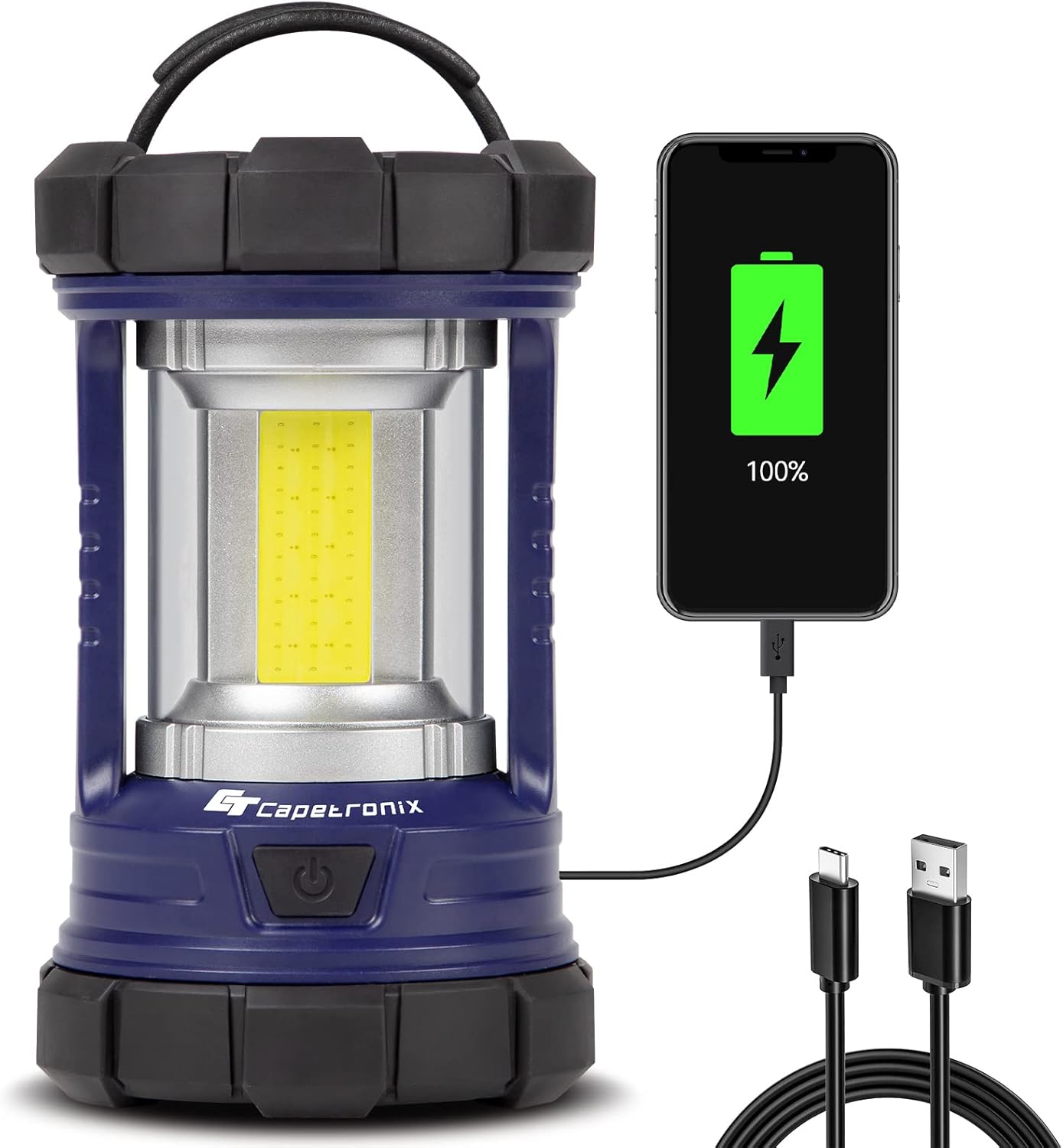
The CT CAPETRONIX HW0YY05 is our top pick for a rechargeable LED lantern with a 3,200 lm output and a built-in battery that also charges your phone. If you need something ultralight for backpacking, the ILEEDear DE-1286 set weighs only 3.527 oz each and runs on AAA batteries.
Our top picks
 Best overall
CT CAPETRONIX HW0YY05
Car camping, basecamp, and emergency kits where brightness and power bank capability matter
 Lowest weight_oz
ILEEDear DE-1286
Backpacking, ultralight camping, and emergency kits where weight is critical
On this page
If you're looking for an LED lantern that doesn't require buying disposable batteries, you've come to the right place. We compared the specifications of rechargeable and battery-operated lanterns to find the best options for camping, emergencies, and everyday use. The key factors are brightness, battery type, weight, and extra features like water resistance and red light modes. Our picks are based on published specs and defined use cases, so you can choose the right lantern for your needs.
Comparison at a glance
Key specs · full specs in each pick| Model | brightness_lumens | water_resistance | battery_type | weight_oz | Link |
|---|---|---|---|---|---|
|
HW0YY05
|
3,200 lm | ipx4 | built-in-rechargeable | 19.2 oz | View on Amazon |
|
DE-1286
|
350 lm | - | aaa | 3.527 oz | View on Amazon |
Best for: Car camping, basecamp, and emergency kits where brightness and power bank capability matter
The CT CAPETRONIX HW0YY05 is a powerful rechargeable camping lantern that puts out 3,200 lm of light, enough to illuminate a large tent or campsite. It has a built-in rechargeable battery with a USB port to charge your phone or other devices. The lantern is rated ipx4 for rain resistance and includes both red light and SOS modes. It weighs 19.2 oz, so it's better for car camping or basecamp use than for ultralight backpacking. On paper, it's the brightest and most feature-rich option here.
Pros
- Very bright at 3,200 lm
- Built-in rechargeable battery doubles as power bank
- Red light and SOS modes included
- IPX4 water resistant
Cons
- Heavier than some alternatives at 19.2 oz
- No adjustable color temperature
Full specifications (7)
- brightness_lumens
- 3,200 lm
- water_resistance
- ipx4
- battery_type
- built-in-rechargeable
- weight_oz
- 19.2 oz
- mounting_type
- lantern
- red_light_mode
- Yes
- sos_mode
- Yes
Specs: Amazon listing
Best for: Backpacking, ultralight camping, and emergency kits where weight is critical
The ILEEDear DE-1286 is a set of two ultra-lightweight LED lanterns that run on AAA batteries. Each lantern weighs just 3.527 oz and produces 350 lm of 360-degree light. They have adjustable brightness levels and are compact enough to fit in a pocket or backpack. Because they use AAA batteries, they're not truly "no batteries," but they offer the convenience of easy replacement. This set is ideal for backpackers and emergency kits where every ounce counts.
Pros
- Extremely lightweight at 3.527 oz each
- Two-pack for shared use
- Adjustable brightness settings
- Compact and easy to pack
Cons
- Requires AAA batteries (not included)
- Only 350 lm brightness, dim for large areas
- No water resistance rating listed
- No red light or SOS modes
Full specifications (4)
- brightness_lumens
- 350 lm
- battery_type
- aaa
- weight_oz
- 3.527 oz
- mounting_type
- lantern
Specs: Amazon listing
How to choose
Brightness: how many lumens do you need?
Brightness is measured in lumens. For a lantern, 3,200 lm is enough to light up a large tent or a campsite table for group activities. A lower output like 350 lm is fine for a small tent or reading, but won't illuminate a wide area. Think about where you'll use the lantern: for basecamp cooking or emergency room lighting, go brighter. For backpacking where weight matters, a lower lumen count is acceptable.
Battery type: rechargeable vs. disposable
A "no batteries" lantern typically means it has a built-in rechargeable battery, like the CT CAPETRONIX HW0YY05. This saves money and waste over time, and often includes a USB port to charge other devices. On the other hand, lanterns that use AAA or AA batteries, like the ILEEDear DE-1286, are lighter and you can swap in fresh cells instantly. If you're on a long trip without power, disposable batteries may be more practical. For most campers, a rechargeable lantern is more convenient.
Weight and portability
Weight matters if you're carrying the lantern in a backpack. The CT CAPETRONIX HW0YY05 weighs 19.2 oz, which is fine for car camping but heavy for backpacking. The ILEEDear DE-1286 weighs only 3.527 oz each, making it ideal for ultralight trips. Consider how far you'll carry it and whether you need one lantern or multiple.
Water resistance and durability
If you camp in rain or near water, look for an IPX rating. The CT CAPETRONIX HW0YY05 is rated ipx4, meaning it can handle splashes. The ILEEDear DE-1286 does not have a published water resistance rating, so you'll want to keep it dry. For emergency use in a power outage, water resistance is less critical, but for outdoor use it's a valuable feature.
Extra features: red light, SOS, and power bank
Red light mode preserves night vision and is less attractive to bugs. SOS mode is useful for emergencies. The CT CAPETRONIX HW0YY05 includes both. A power bank feature lets you charge your phone, which can be a lifesaver during outages or long trips. The ILEEDear DE-1286 lacks these extras but offers adjustable brightness. Decide which features matter for your typical use.
Frequently asked questions
What does "no batteries" mean for an LED lantern?
It usually means the lantern has a built-in rechargeable battery that you charge via USB, so you don't need to buy disposable batteries. Some lanterns still use AAA or AA batteries but are marketed as "no batteries" because they don't require a separate battery pack. Always check the battery type before buying.
How long does a rechargeable lantern last on a full charge?
Runtime depends on brightness setting and battery capacity. The CT CAPETRONIX HW0YY05 has a built-in battery that can run for several hours on high and much longer on low. Check the manufacturer's specifications for exact runtime at each brightness level.
Can I use a rechargeable lantern while it's charging?
Many rechargeable lanterns, including the CT CAPETRONIX HW0YY05, can be used while plugged in. This is useful during a power outage if you have a backup battery pack. Always confirm with the product manual.
Are battery-operated lanterns better for emergencies?
It depends. Rechargeable lanterns need to be charged beforehand, while battery-operated ones can use spare batteries you keep on hand. For long-term emergency kits, a lantern that uses standard batteries like AAA may be more reliable. The ILEEDear DE-1286 runs on AAA batteries, which are easy to stockpile.
What is the best LED lantern for backpacking?
For backpacking, weight is key. The ILEEDear DE-1286 set weighs only 3.527 oz each, making it one of the lightest options. If you prefer rechargeable, look for a compact model that weighs less than the CT CAPETRONIX HW0YY05. The CT CAPETRONIX HW0YY05 is too heavy for most backpacking trips.
Bottom line
For most campers and emergency preppers, the CT CAPETRONIX HW0YY05 offers the best combination of brightness, rechargeability, and extra features like a power bank and red light. If you need an ultralight lantern for backpacking or a backup that runs on common AAA batteries, the ILEEDear DE-1286 set is a smart choice. Both are reliable LED lanterns that fit different use cases.
Related articles
-
Best Headlamp for Camping with Kids
Find the best headlamp for camping with kids. Compare top picks based on brightness, runtime, weight, and kid-friendly features for safe family fun.
Nov 2, 2026
-
Best Camping Lantern with Power Bank
Compare the best camping lanterns with built-in power banks. Our top pick offers 2300 lumens and a 21-hour runtime for camping and emergencies.
Nov 2, 2026
-
Best Camping Lights for Rv Awning
Find the best camping lights for your RV awning. Compare clips, LED strips, and RGB kits based on mounting, brightness, and weather resistance.
Nov 2, 2026
-
Best Power Station for Van Camping
Find the best power station for van camping based on weight, runtime, and features. Compare top picks from ZeroKor, MARBERO, and Powkey.
Nov 2, 2026