 Pitch & Pack
Quick answer
For most hikers, Sawyer Mini SP120 is the best water filter for hiking. It weighs 0.09 lb, attaches to bottles and hydration packs you already own, and its filter is rated for 100,000 gal. If you would rather have a bottle you can fill and squeeze, Katadyn BeFree 8018006 is the simpler choice.
Our top picks
 Best overall
Sawyer Mini SP120
Ultralight day hikes and long thru-hikes
 Top capacity
Sawyer MINI Water Filter SP128
Hikers who want a ready-to-use kit
 #3 pick
Sawyer SP129
Squeezing into bottles and camp gravity setups
 #4 pick
SimPure gear
Basecamps and group water supply
 #5 pick
Katadyn BeFree 8019639
Trail running and short fast hikes
 #6 pick
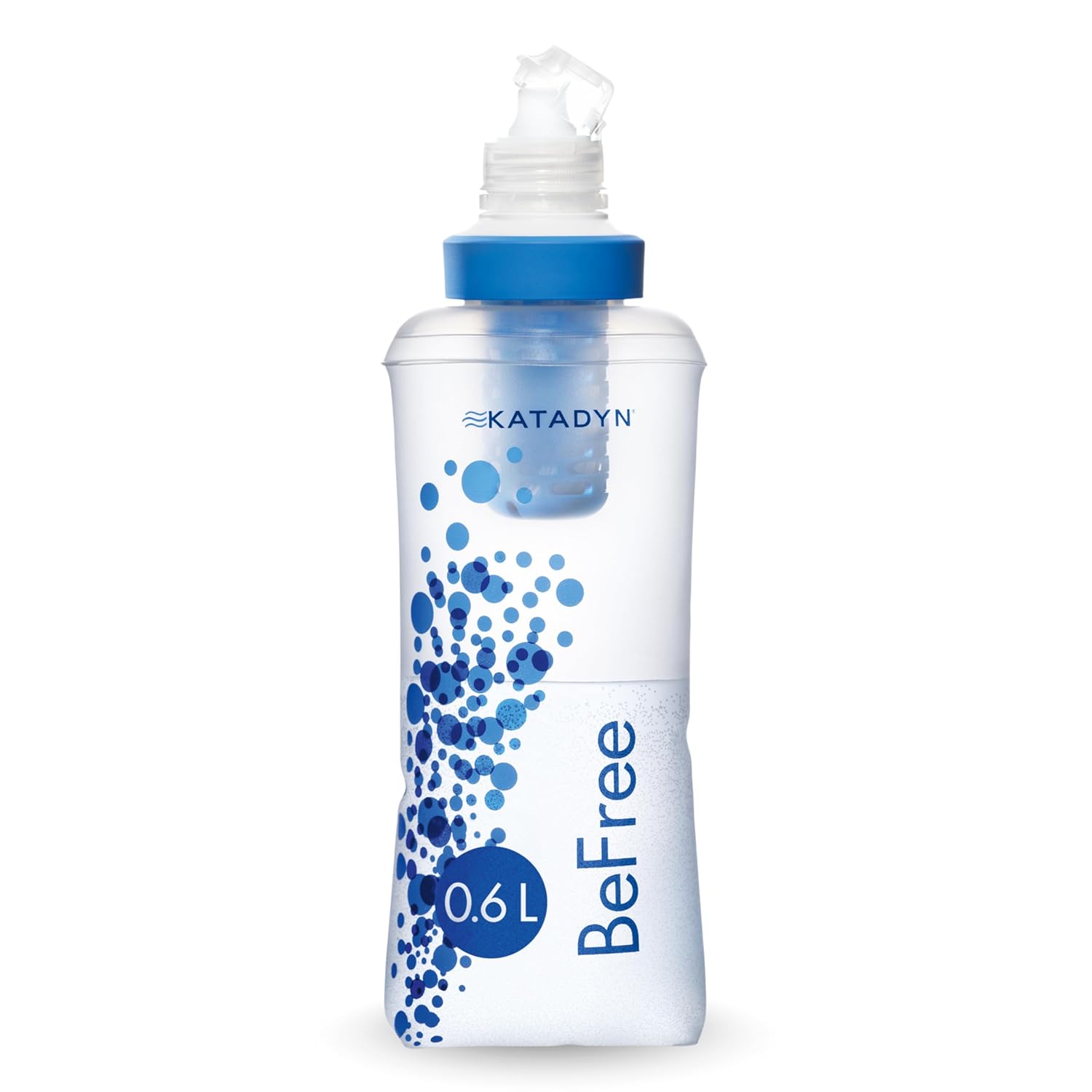
Katadyn BeFree 8018006
Day hikes and fast overnighters
 #7 pick
BACHGOLD Squeeze Filtered Water Bottle 100111
Packable everyday trail filtering
 #8 pick
Katadyn BeFree AC 8021402
Travel and hut trips with treated water
 #9 pick
LifeStraw Peak LSPSFXMLAN1
Hikers who cook and drink from one source
 #10 pick
JEYOGO JYWFB2603
Rough use and emergency kits
 #11 pick
Katadyn BeFree AC 8021507
Camp and travel where taste matters
 #12 pick
Lormandy TriplePure6000
A backup filter in a small pack
 #13 pick
Sawyer Products Personal Water Bottle Filter SP140
Beginners who want one simple bottle
On this page
A water filter decides whether a long day out ends with a refill or an upset stomach. This guide is for hikers, backpackers and trail runners choosing between squeeze bottles, inline filters, straws and gravity setups.
We compared published specifications, filter ratings and packed weight against defined use cases: fast day hikes, multi-day backpacking, water for a group at camp, and emergency kits. The picks rest on manufacturer data and on how each design fits a job, not on field use.
If you are building out a full camp kitchen, our guide to the best collapsible water container for camping covers storage and dispensing.
Comparison at a glance
Key specs · full specs in each pick| Model | capacity | weight | material | has_pump | Link |
|---|---|---|---|---|---|
|
SP120
|
100,000 gal | 0.09 lb | - | - | View on Amazon |
|
SP128
|
100,000 gal | 0.125 lb | - | - | View on Amazon |
|
SP129
|
100,000 gal | - | polyethylene | - | View on Amazon |
|
gear
|
0.79 gal | 0.2 lb | plastic | No | View on Amazon |
|
8019639
|
0.159 gal | 0.13 lb | - | No | View on Amazon |
|
8018006
|
0.26 gal | 0.14 lb | - | No | View on Amazon |
|
100111
|
0.264 gal | 0.209 lb | - | No | View on Amazon |
|
8021402
|
0.264 gal | 0.168 lb | - | - | View on Amazon |
|
LSPSFXMLAN1
|
0.172 gal | 0.225 lb | - | - | View on Amazon |
|
JYWFB2603
|
0.264 gal | 0.265 lb | - | - | View on Amazon |
|
8021507
|
0.264 gal | 0.33 lb | - | - | View on Amazon |
|
TriplePure6000
|
1,300 gal | 0.24 lb | - | - | View on Amazon |
|
SP140
|
0.266 gal | 0.344 lb | - | - | View on Amazon |
Best for: Ultralight day hikes and long thru-hikes
The lightest filter in this guide at 0.09 lb, and the one we would hand to most hikers. It is an inline unit that screws onto a disposable bottle, a squeeze pouch or a hydration pack tube, and you can drink through it like a straw. The filter is rated for 100,000 gal, far more than a season of weekend trips. There is no bottle in the box, so pair it with gear you already carry.
Pros
- Lightest filter here at 0.09 lb
- Filter rated for 100,000 gal
- Fits standard bottles and hydration packs
Cons
- No bottle or pouch in the box
- Needs a separate container to be useful
Best for: Hikers who want a ready-to-use kit
The same inline design as our top pick, sold as a kit with a squeeze pouch, a drinking straw and a cleaning plunger, so it works on day one. It weighs 0.125 lb, slightly more than the bare filter, and carries the same 100,000 gal rating. Pick it if you would rather not hunt for a compatible bottle before your first trip. The pouch is small, so long dry stretches still mean frequent refills.
Pros
- Kit includes pouch, straw and plunger
- Same long filter rating as our top pick
- Weighs 0.125 lb
Cons
- Pouch holds little for long dry stretches
- Slightly heavier than the bare filter
Best for: Squeezing into bottles and camp gravity setups
The pouch-and-filter version of the Sawyer design: two collapsible pouches, a straw and hydration pack adapters in a mesh bag. The polyethylene pouches roll flat when empty, so the set packs into a side pocket. Filter life is rated at 100,000 gal. It suits hikers who squeeze water into a bottle or straight into their mouth, and it can hang as a gravity setup at camp. Weight is not listed in our data, so check that before you commit.
Pros
- Two collapsible pouches included
- Pouches roll flat when empty
- Can hang as a gravity setup at camp
Cons
- Weight is not listed in our data
- Soft pouches are less sturdy than a hard bottle
Full specifications (3)
- capacity
- 100,000 gal
- material
- polyethylene
- collapsible
- Yes
Specs: Amazon listing
Best for: Basecamps and group water supply
A gravity system rather than a squeeze bottle. Fill the 0.79 gal bag, hang it from a branch with the included strap, and let water drain through the filter while you set up camp. Nothing needs pumping or squeezing, which makes it the least tiring way to supply water for a group. It weighs 0.2 lb and the bag rolls up small. Best for basecamps and family trips; for a solo day hike it is more water than you need.
Pros
- Hands-free flow, no pumping or squeezing
- 0.79 gal bag suits groups
- Rolls up small at 0.2 lb
Cons
- Needs a branch or post to hang from
- More water than a solo day hike needs
Full specifications (5)
- capacity
- 0.79 gal
- weight
- 0.2 lb
- material
- plastic
- has_pump
- No
- collapsible
- Yes
Specs: Amazon listing
Best for: Trail running and short fast hikes
The smallest bottle here at 0.159 gal, built for trail running and fast, light days. It weighs 0.13 lb and collapses flat into a vest pocket once empty. Fill it from a stream, screw the filter cap on and squeeze; there is no pumping and no waiting. The narrow volume is the catch: on a hot, exposed climb you will refill more often than with a larger bottle. It is the capacity outlier in this comparison, so choose it for short runs rather than long dry stretches.
Pros
- Lightest bottle here at 0.13 lb
- Collapses into a vest pocket
- No pumping, no tablets, no setup
Cons
- Smallest capacity at 0.159 gal
- Frequent refills on hot, exposed climbs
Full specifications (4)
- capacity
- 0.159 gal
- weight
- 0.13 lb
- has_pump
- No
- collapsible
- Yes
Specs: Amazon listing
Best for: Day hikes and fast overnighters
The middle size in the BeFree line: 0.26 gal of water in a soft flask that weighs 0.14 lb and flattens as you drink. The filter sits in the cap, so you fill, screw on and squeeze, and cleaning is a shake and a swish rather than a backflush. It suits day hikes and fast overnighters where you want a bottle that disappears into the pack when empty. Against the smaller BeFree it buys noticeably more water for very little extra weight.
Pros
- 0.26 gal at 0.14 lb
- Shake-clean, no backflushing
- Flattens as you drink
Cons
- No carbon stage for taste
- Soft flask is awkward to fill in shallow water
Full specifications (4)
- capacity
- 0.26 gal
- weight
- 0.14 lb
- has_pump
- No
- collapsible
- Yes
Specs: Amazon listing
Best for: Packable everyday trail filtering
A collapsible squeeze bottle with a two-stage filter: a nanofiber layer followed by a hollow-fiber membrane. In practice you squeeze gently and water comes out, with no pumping and no tablets. Capacity is 0.264 gal and it weighs 0.209 lb, which puts it in the middle of the squeeze-bottle group on weight. The cap is designed to stay leak-resistant when closed, so it can ride in a daypack next to a sleeping bag. Rinse it to restore flow; there are no cartridges to swap.
Pros
- Two-stage filter built into the cap
- Leak-resistant when the cap is closed
- Rinse to restore flow, no cartridges
Cons
- Heavier than the lightest squeeze bottles
- No carbon stage for taste
Full specifications (4)
- capacity
- 0.264 gal
- weight
- 0.209 lb
- has_pump
- No
- collapsible
- Yes
Specs: Amazon listing
Best for: Travel and hut trips with treated water
A one-liter BeFree with a removable carbon stage. The carbon layer reduces chlorine, odors and off tastes, which helps when you fill from a tap or a treated source; pull it out on clear backcountry water and flow improves. Capacity is 0.264 gal and it weighs 0.168 lb, one of the lighter bottles of this size here. The double-layer bottle and flip cap feel more substantial than a plain soft flask. It works for travel and hut trips as well as trails.
Pros
- Removable carbon stage improves taste
- 0.168 lb for a one-liter bottle
- Flip cap and carabiner handle
Cons
- Carbon stage slows flow when fitted
- Heavier than the plain BeFree bottle
Best for: Hikers who cook and drink from one source
A squeeze bottle built around a compact filter with a backwash accessory, so you can push flow back through the membrane when silt slows it down. Capacity is 0.172 gal and it weighs 0.225 lb. The bottle material is described as thicker than a standard soft flask, and the kit works three ways: as a bottle, as a straw, or as a filter that pushes water into a pot or another bottle. That flexibility suits hikers who cook and drink from the same source.
Pros
- Works as bottle, straw or inline filter
- Backwash accessory included
- Thicker bottle material than a soft flask
Cons
- Small capacity for its weight
- Backwashing adds a chore at camp
Best for: Rough use and emergency kits
A collapsible bottle made from flexible TPU with a hollow-fiber filter in the cap. Capacity is 0.264 gal and it weighs 0.265 lb, heavier than most one-liter squeeze bottles in this guide. The extra material buys a sturdier bottle that stands up to repeated squeezing. Cleaning is a shake rather than a syringe, and the maker includes a filter integrity check you can run after a drop or a long storage period. A sensible pick for rough use and emergency kits.
Pros
- Sturdy TPU bottle for rough use
- Shake cleaning, no syringe needed
- Filter integrity check included
Cons
- Heavier than most one-liter squeeze bottles
- No carbon stage for taste
Best for: Camp and travel where taste matters
The same two-stage, carbon-equipped BeFree bottle as Katadyn BeFree AC 8021402, listed at 0.33 lb with a 0.264 gal capacity. The carbon stage handles chlorine, odors and taste, and it comes out when you want faster flow from clear water. The double-layer bottle, flip cap and carabiner handle are built for daily handling on the trail. If packed weight is your first priority, the lighter AC version is the better pick; this one suits travel and camp use where a sturdier bottle helps.
Pros
- Carbon stage improves taste
- Double-layer bottle and flip cap
- Carabiner handle for packing
Cons
- Heaviest BeFree bottle at 0.33 lb
- Carbon stage slows flow when fitted
Best for: A backup filter in a small pack
A filter straw rather than a bottle. You drink straight from the source, or use the included tubing and pouch to filter into a container. The filter is rated for 1,300 gal and the unit weighs 0.24 lb, so it takes almost no room in a pack. A three-stage path, with a sediment prefilter ahead of the membrane, is aimed at silty water. It is the least convenient option for camp cooking because you filter by drinking or by squeezing through tubing, but it makes a good backup.
Pros
- Weighs 0.24 lb
- Filter rated for 1,300 gal
- Kit includes pouch and tubing
Cons
- Slow for filling a pot
- No bottle included
Best for: Beginners who want one simple bottle
A complete bottle-and-filter package: a wide-mouth bottle with the filter built into the cap, plus a backwash syringe. The mouth measures 2.48 in, so it takes standard wide-mouth caps and is easy to fill and scrub. Capacity is 0.266 gal and it weighs 0.344 lb, the heaviest item in this guide. If you want one object that is both bottle and filter, and you do not mind the weight, it is the simplest system to hand to a beginner.
Pros
- Bottle and filter in one unit
- Wide 2.48 in mouth is easy to fill
- Backwash syringe included
Cons
- Heaviest option at 0.344 lb
- Takes up pack space when empty
How to choose
Filter type: squeeze, straw, inline or gravity
Squeeze bottles such as Katadyn BeFree 8018006 and BACHGOLD Squeeze Filtered Water Bottle 100111 combine bottle and filter, so there is nothing to assemble at the stream. Inline filters like Sawyer Mini SP120 screw onto a bottle or hydration tube you already own and add almost nothing to your load. Straws such as Lormandy TriplePure6000 are the smallest option but the slowest for filling a pot. Gravity systems like SimPure gear trade pack space for hands-free flow at camp. Match the type to how you drink: sipping on the move, or collecting water for a meal. If you cook at camp, our guide to best backpacking cookware covers pots worth filtering into.
Weight and packed size
On a long hike, the filter you carry is the filter you use, so weight matters less than whether the setup disappears into your routine. The spread here is wide: Sawyer Mini SP120 weighs 0.09 lb, while Sawyer Products Personal Water Bottle Filter SP140 weighs 0.344 lb because it includes a rigid bottle. Soft flasks collapse as you drink and pack smaller at the end of the day, while hard bottles hold their shape but take the same space empty. If you count grams across your whole kit, the same logic applies to cooking gear, and our picks for best titanium cookware for backpacking follow it.
Capacity: bottle volume versus filter life
The capacity figure means two different things in this guide. For squeeze bottles it is the volume of the bottle: 0.159 gal on the smallest BeFree, 0.79 gal on the gravity bag. For inline and straw filters it is the volume the filter is rated to process over its life, such as 100,000 gal for the Sawyer models or 1,300 gal for the Lormandy straw. Read the number against the product type before you compare two models. A big bottle volume means fewer refills; a big filter rating means fewer replacements.
Cleaning and long-term care
Most of these filters are maintained by backflushing or shaking, not by taking them apart. Squeeze bottles such as Katadyn BeFree 8018006 and JEYOGO JYWFB2603 clean with a shake and a swish, while inline units usually ship with a syringe or plunger for pushing water back through the membrane. Do that after silty water, not just at the end of a trip, or flow drops. Store filters dry and keep them from freezing. Camp washing is a separate job, and our guide to the best camping sink covers keeping dishes and hands clean without hauling extra water.
Water for cooking and group camp
Drinking on the move is only half the job. A hot dinner needs water by the liter, and filtering it one sip at a time through a straw is slow. Gravity bags and squeeze bottles that push water into a pot are the practical choice for camp: SimPure gear hangs and drains while you cook, and LifeStraw Peak LSPSFXMLAN1 can push water into cookware or another bottle. For a group, plan on refilling the bag more than once. Once the water is ready, our guide to the best compact camping stove covers boiling and simmering it.
Frequently asked questions
What is the best water filter for hiking overall?
Sawyer Mini SP120 suits most hikers. It weighs 0.09 lb, attaches to bottles and hydration packs you already own, and its filter is rated for 100,000 gal. If you want a ready-to-use kit with a pouch included, Sawyer MINI Water Filter SP128 is the same design sold complete.
How long does a hiking water filter last?
It depends on what the number describes. The Sawyer filters here are rated for 100,000 gal of water and the Lormandy straw for 1,300 gal, while the squeeze bottles list bottle volume instead. Flow rate is your practical signal: clean the filter when it slows, and replace it if it stays slow after backflushing.
Is a squeeze bottle or an inline filter better for backpacking?
A squeeze bottle is simpler: fill, screw on, drink. An inline filter is lighter and lets you keep using a bottle or bladder you already trust. For most backpackers the inline route saves weight, while a squeeze bottle saves fiddling at the stream. Katadyn BeFree 8018006 and Sawyer Mini SP120 show the two approaches at a similar packed size.
Can I filter water straight into a cooking pot?
Yes, with the right design. LifeStraw Peak LSPSFXMLAN1 can push water through the filter into cookware, and Lormandy TriplePure6000 includes tubing for filling a container. Gravity bags such as SimPure gear are the easiest way to collect a large volume for a group meal. Filter first, then boil if you want an extra margin.
Bottom line
Most hikers should start with Sawyer Mini SP120: it is the lightest filter here, it fits gear you already carry, and the filter rating outlasts years of trips. Choose Sawyer MINI Water Filter SP128 if you want the pouch included, Katadyn BeFree 8018006 for a bottle that collapses as you drink, and SimPure gear when you need water for a group at camp. Trail runners can go smaller with Katadyn BeFree 8019639.
Related articles
-
Best Camping Stove Windscreen
Compare seven folding camping stove windscreens by weight, panel design and stability to find the right windbreak for backpacking or car camping.
Nov 2, 2026
-
Best Insulated Camping Mug
Compare seven insulated camping mugs by capacity, weight, and lid design to find the right one for car camping, backpacking, or the camp kitchen.
Nov 2, 2026
-
Best Camping Trash Can
Compare 13 collapsible camping trash cans by capacity, weight, and packed size. Find the best pick for car camping, backpacking, and group sites.
Nov 2, 2026
-
Best Camping Cutting Board
Compare four camping cutting boards by weight, folding design, and cleaning needs. See which pick suits backpacking, car camping, or a base camp kitchen.
Nov 2, 2026